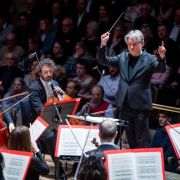
Few conductors combine analytical rigour with such instinctive control of orchestral colour as Esa-Pekka Salonen. At Tanglewood, he approached three repertory pillars as living structures, moving through radically different conceptions of musical momentum: Wagner’s endlessly deferred resolution, Sibelius’ continuous transformation and Beethoven’s boldly theatrical affirmation.

Wagner's Prelude and Liebestod immediately revealed the qualities that would define Salonen's conducting throughout the evening. Rather than treating the Prelude as a succession of climaxes, he shaped it in long spans, giving the chromatic lines room to unfold while maintaining a firm sense of direction. He was unafraid either to let caesuras linger or to accelerate when the music demanded it. Individual contributions, particularly those of the harp, were carefully underlined without distracting from the larger arc. The orchestra responded generally well to his elegant and consistently precise gestures, though several entries were not perfectly coordinated. Most impressive was the seamless connection he forged between Prelude and Liebestod, allowing the latter to emerge as the inevitable fulfilment of the tension accumulated before it.


Sibelius’ Seventh Symphony, a musical landscape slowly reshaping itself, proved an ideal vehicle for Salonen’s architectural instincts. He made its organic growth feel faintly unsettling, each idea sounding at once new and half-remembered as it returned in altered form. Salonen bound these changing materials into a single, coherent trajectory without smoothing over their individuality. The three appearances of the trombone theme – magnificently played by Toby Oft – marked the symphony’s principal structural junctures with noble authority. Salonen’s decision to single out Oft alone at the close underscored the importance of his contribution. In the faster sections, darting woodwind figures and restless strings retained remarkable definition. As elsewhere that evening, Salonen’s transitions were meticulously calibrated, changes of tempo and texture registering clearly without compromising the work’s continuity. The Boston Symphony Orchestra balanced chamber-like transparency with symphonic weight, while the closing pages arrived with quiet inevitability, their C major resolution never entirely reassuring.

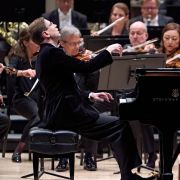
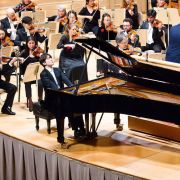
Beethoven’s Emperor Concerto brought the evening’s most overtly public statement, its expansive rhetoric standing in contrast to the inwardness that had marked the concert’s first half. Yefim Bronfman projected the opening flourishes with effortless authority and clarity, while quieter passages revealed a remarkably varied tonal palette. There were occasional moments when his phrasing suggested a broader, more monumental conception than Salonen’s, though the conductor and soloist quickly found common ground. The Adagio un poco mosso found Bronfman at his most lyrical, his dialogue with the BSO woodwinds marked by disarming simplicity. Particularly striking was the ease with which the piano ceded and reclaimed the melodic line, each exchange suggesting genuine conversation, not merely accompaniment. Salonen judged Beethoven’s seamless transition into the finale with exquisite patience before the Rondo sprang to life with playful vitality. Bronfman preserved a springy lightness throughout, differentiating repeated figures through touch and articulation instead of relying on sheer force. Salonen answered with crisp responses and an exuberant close.


Bronfman returned with the Andante from Liszt’s Grandes études de Paganini as an encore. As in his Beethoven, the firebrand of earlier years remained unmistakably present, although virtuosity now served as a means rather than an end.