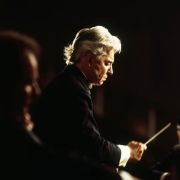
Until today, the Singapore Symphony Orchestra has had just three music directors in its 47-year history – Choo Hoey, Lan Shui and Hans Graf. Finnish conductor Hannu Lintu was introduced this evening as its fourth. A towering physical presence with a hint of a wizened smile, he made his presence felt immediately.

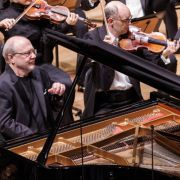
Lintu’s inaugural concert programme consisted wholly of 20th- and 21st-century works, opening with the world premiere of Après l'Odyssée by Singaporean composer Tan Chan Boon. The École Normale-schooled Tan is Singapore’s most prolific symphonist, and this nearly 20-minute commission is the first movement of his yet to be performed Seventh Symphony. His models are anachronistically Romantic, with Anton Bruckner and Richard Strauss coming to mind, not least the pastoral opening string melody backed by cascading woodwind chords. The movement’s title After The Odyssey was premised on the feeling of relief and uneasy calm after his Sixth Symphony, L’Odyssey (recounting the Covid pandemic). Its breezy beginning was qualified by a fugal treatment of its second subject. Tension ensued with the introduction of brass and percussion, gradually building to a fulsome climax before receding in a quiet close that portends hope for the future. A performance of the symphony in full is keenly anticipated.


American violinist Gil Shaham made a welcome return to Singapore with the Asian premiere of Nomad Concerto by American composer Mason Bates. Conceived in four movements, this deliberately exotic yet gratifyingly tonal work imagines an assemblage had Ravel been requested to expand his rhapsodic Tzigane and throw in some New World jazz for good measure. Shaham’s virtuosity defined its first two movements, Song of the balloon man and Magician at the bazaar, casting a spell as an itinerant entertainer journeying through Eastern Europe to the Middle East. The mystically desolate slow movement Desert vision: oasis quoted a Jewish song before the rocking syncopations of Le jazz manouche, à la Django Reinhardt as Bates’ own programme notes reminds, brought down the house. The ensuing cheers ensured that the Magician movement, with its John Williams’ Harry Potter moments, was encored.
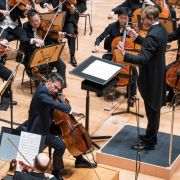
The only familiar music on show was Mahler’s Fifth Symphony, in a gripping performance that was long on drama but short on bombast. Jon Paul Dante’s excellent trumpet solo set the tone for a deliberately paced funeral march, yet there was never a moment where the narrative lagged. In the tumultuous struggle of the second movement, the marking mit größter Vehemenz (with greatest vehemence) was taken most literally, yet the earlier march’s driving impetus remained fresh in the subconscious. The central Scherzo’s French horn solo resounded like an exultant call from the abyss, heralding a celebration of some perverse joy, such was Mahler’s idea of irony.


There were no doubting the Adagietto’s love message, delivered plain and without neuroses by gilded strings and harpist Gulnara Mashurova. In the attacca finale, an initial French horn fluff did little to dispirit the clever counterpoint Mahler wove into his satirical Wunderhorn song Lob des hohen Verstandes (In Praise of High Intellect), wittily closing the symphony on a blazing high. The orchestra responded with the acute awareness of a band guided by a fresh and uncompromising new leader who knows exactly what he wants and how to get it. Lintu has just ushered in an exciting and enticingly interesting new future for the Singapore Symphony in seasons to come.