This chamber concert by members of the West Australian Symphony Orchestra was scheduled to be held in the salubrious surrounds of the Government House Ballroom, but apparently problems with the roof caused it to be moved to Perth Town Hall. While not as gracious and comfy as the former venue, like most 19th-century Australian Town Halls, it has a small but functional stage and a warm acoustic. The programme itself, featuring two major works, was notable as a study in contrasts.

Shostakovich’s String Quartet no. 8 in C minor was composed in Dresden in 1960 when the effects of its wartime bombing were evident. The version performed here was arranged for chamber orchestra by Rudolf Barshai in 1967 (as Op.110a), its five movements to be performed continuously. Dedicated to “the victims of fascism and the war”, it can certainly be thought to have contemporary relevance, alternating between the alarms and excursions of ongoing conflict, and resignation if not outright despair.


WASO’s string performers were led by Associate Concertmaster, Riley Skevington. The Largo led off with Shostakovich’s signature theme gently caressed by the cellos, moving into the full strings followed by a more questioning motif from the violin. Without warning this movement segued into the blitzkrieg of the Allegro molto, full of nervous energy, featuring a blistering attack from Andrew Sinclair’s double bass. The third movement Allegretto featured sardonic waltzing figures, with commentary from the violas. Another Largo movement began peacefully but was soon violently interrupted by a three note theme suggested to represent the KGB knocking at the door (among other things). The final Largo provided a peaceful respite but not exactly hope, falling into resigned silence, maintained for a long moment before the extended applause.

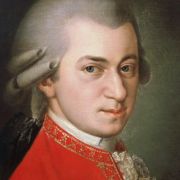
After an interval, there was a complete change of personnel and tonality for Mozart’s “Gran Partita”, the Serenade no. 10 in B flat major for winds, K361. A stage full of strings became a stage full of wind instruments plus double bass (this time, Giovanni Vinci). We also welcomed a conductor, John Keene, normally Associate Principal Double Bass. After the excitation of the Shostakovich, this was a balm for the senses, the auditory ones anyway. The opening Largo contrasted with that of the Shostakovich, being quite restful in comparison, opening up to a cheerful Allegro, with a bubbling bassoon. The stately first Menuetto was followed by the gently rippling Adagio, the jollier second Menuetto, graceful Romanze, jaunty Tema con variazioni before concluding with the unmitigated gaiety of the Finale, all reminding us that Mozart, for all his problems, probably had a happier time of it overall than the anxieties of living in Soviet Russia. All was beautifully played, with the engaging interplay of the clarinets (under Alan Meyer) with the oboes (under Liz Chee) and a wonderfully polished performance by the whole ensemble.