Choosing a specific year for a concert programme may be a very singular way of planning a schedule. But since the BBC Scottish Symphony Orchestra has been celebrating its 90th anniversary this season, works conceived from the year of the orchestra’s launch in 1936 was entirely logical. And what better way to showcase the qualities of this national orchestra in the third of its four Proms appearances with works highlighting both individual and collective talents.

The orchestra’s principal flautist, Matthew Higham, began the evening with Edgar Varèse’s unaccompanied and curiously named work for solo flute, Density 21.5. Lasting little more than three minutes, the work was premiered in New York in February 1936 by the distinguished French flautist Georges Barrère who had commissioned the work from his fellow émigré. It was originally conceived to promote the improved sound and capabilities of the world’s first all-platinum flute; its title derived from the physical density of the precious metal. Standing behind the bust of Sir Henry Wood, Higham produced a wealth of expression to unveil this haunting birdsong with all its intricate rhythms and melodic angularities. Pitch never faltered nor delicacy of tone, and its shifting phrase patterns and haunting atmosphere formed an ideal link for Béla Bartók’s Music for Strings, Percussion and Celesta that followed without a break.


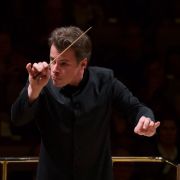
Under Ryan Wigglesworth’s baton the first movement’s mystery and sinuous contours unfolded with scrupulous attention to detail aided and abetted by a perfectly controlled crescendo that built towards the apex of its arc-like structure, its climax signalled, in no uncertain terms, by timpanist Jude Carlton. Further disquiet and punchy rhythms arrived with the succeeding Allegro, where a manic energy coursed through its neoclassical conception. Piano and timpani formed a vital presence, their timbres distinct against the crisply articulated string playing, with no less involving contributions from harp and celesta, and with clean ensemble and flawless intonation throughout.
Tensions were heightened with the third movement’s ‘night music’, where two solo violins and celesta created their own eerie unison, along with the unsettling timbre of xylophone and timpani. Little wonder Stanley Kubrik used this atmospheric movement for his 1980 horror film The Shining. Folk influences, already in the second movement, returned in the fourth, its visceral power, so typical of the composer, given an unbuttoned outing, Wigglesworth bringing off a highly polished performance.

There followed a well-executed account of Rachmaninov’s Symphony no. 3 in A minor, all neat and tidy (and including the first movement’s exposition repeat), but never quite gratifying in respect of its emotional temperature. That heart-easing second subject felt somewhat cool, yet its tutti return hinted at romantic ardour, though without any Hollywood schmaltz. Opportunities to indulge or linger within a phrase were largely avoided, Wigglesworth preferring to shape an unsentimental reading, its bittersweet qualities somewhat muted and brass kept on a tight leash. The opening of the Adagio brought some magic with beautifully rendered contributions variously from horn, solo violin and flute, and plenty of warm tone from the BBCSSO strings. Equally impressive was the moulding of the faster central panel into a logical whole, drama emerging with unrestrained brass and timpani in the march-like episode. The Finale combined brilliance and nostalgia, the whole bookended by a dancing energy, its impish fugato given out by superbly disciplined strings. Elsewhere, melancholy was in evidence too and coloured by Rachmaninov’s favourite Dies irae motto. But it was a scintillating danse macabre that brought the work to a rousing close, the orchestra clearly enjoying themselves.