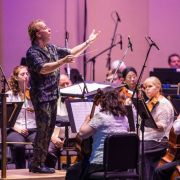
Sandwiched between two repertory war horses, the Philadelphia Orchestra offered this weekend the local premiere of a work it co-commissioned: Ears of the Book, by Pulitzer Prize winner Du Yun. The 20-minute concerto spotlights Wu Man, a virtuoso player of the pipa, a Chinese lute, and was composed specifically for her. The program also featured the local debut of Elim Chan, a fast-rising conductor who last year helmed the Last Night of the BBC Proms.


The sound of the pipa toggles between an uncanny warmth and a startling cackle, and Wu seemed entirely comfortable dispatching both modes. It is not an instrument with easy resonance, and would probably be better suited to a chamber-sized theater than the 2500-seat Marian Anderson Hall. Wu beckoned her audience to lean in and appreciate the intricacies of her lute’s sound in the concerto’s many unaccompanied passages, but the orchestral component tended to wash out the pipa entirely, at odds with a program note that described the instrument as the piece’s “narrator” and organizing force.
Du’s overall sound world betrayed a charged and combative edge. The percussion attacked their numerous instruments like battering rams, while the strings sawed in unison. There was no beauty to be found in the brass or woodwind, but also little logic in their grotesquerie. If themes could be gleaned, they flattened without development. Chan, an animated figure on the podium, kept the tension high until the final gulped breath, but the reason for this work, the lovely and beguiling pipa, ended up lost amid the cacophony.


Earlier, Debussy’s Prélude à l’après midi d’un faune opened with the bewitching flute solo performed delicately by the orchestra’s Associate Principal, Patrick Williams. The tone poem then devolved as Chan’s fussy micromanagement of each section created an atmosphere less of repose than rigid control. That aura continued in Mussorgsky’s Pictures at an Exhibition, which seemed all about forward momentum rather than detailed portraiture. Shorn of rubato, the brass sounded vulgar rather than regal, and the moments you wait for – like the haunted transformation of the main theme, Con mortuis in lingua mortua – passed almost for nothing.