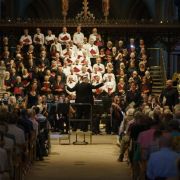
This was extraordinary. So often, one approaches a performance of Mahler's Resurrection Symphony with the expectation of spectacle. As if the piece were a firework, and all that was required was to light the touchpaper, stand back and marvel at the familiar display of dramatic lights and explosions. Not so here. So much more.

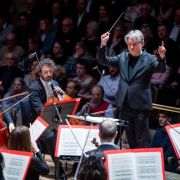
Kazuki Yamada never seems to take anything for granted, making his considered interpretations unique and personal. For him – surprisingly, impressively – the overwhelming tone that pervaded his survey of Mahler 2 was solemnity. It’s worth remembering the piece began life as Totenfeier (Funeral Rite), a symphonic poem mystically contemplating life from beyond the grave. This became the foundation for his interpretation.


Having flagged up the conductor, one of the most remarkable aspects was that, in practice, one hardly paid him any attention at all. Throughout, the emphasis was on each and every one of the orchestral players. The details: all so familiar, yes – yet every one had been made new, with an individual, personal stamp on it. A symphony in the truest sense: the product of a large number of voices contributing to the complex whole.
The emotional pivoting was palpable, sharp and soft, firm and gentle, heavy and light – and this was just in the first five minutes. When things turned sinister, the sense of menace was remarkably unsettling, Yamada highlighting its distinct aspects of grotesque. The first movement’s strange ending became wraith-like, strained and askew, nothing even remotely approaching triumphant. Yamada thereby treated the first movement not (as many do) simply as a flashy opener, not even as high drama, but as a serious, measured opening statement in a much larger symphonic argument.

After a lengthy, reverential pause (requested by Mahler but usually ignored), the second movement came as a relaxed dance, with exquisite tilting of tempo around phrases and cadences. Yamada kept it low-key and intimate as the rhythmic chugging set in, treating the threatening elements as ephemeral aberrations. Were they simply shrugged off? It seemed so, the final pizzicato sequence revelling in its fragile delicacy.
Though the central movement was leisurely and light, Yamada avoided playing up its humour. The first big push was genuinely heraldic – as if a bunch of knights on horseback had spontaneously turned up – but the music quickly leaned back into balmy, lyrical loveliness. As such, the subsequent foreshadowing eruption became the strangest aberration yet, but this too was channelled back into the main idea, absorbed and reduced. It was in this electrified aftermath that Urlicht began, sombre but tender, contralto Jess Dandy’s superb solo achingly human, vulnerable yet indefatigable.


Then the ultimate pivot, the City of Birmingham Symphony Orchestra truly incandescent in the opening of the final movement. As elsewhere – everywhere – though, it too died back, faded to glowing warmth. Solemn once more, dark chorales linking back to Urlicht, bestowing gravitas on the bright climaxes, with the ensuing shadows and roiling turbulence confirming that nothing here was a foregone conclusion.

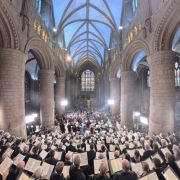
The off-stage brass – magnificently clear – came as a ghostly echo of the heraldic music from earlier, an integral part of what was now a spine-tingling sense of ceremony. What did they herald? Something immense, unknowable. The entrance of the CBSO Chorus was utterly hushed, practically inaudible, an almost numinous trigger for the start of the final great hymn. Solemnity persisted through the soloists’ final lines – like some secular credo, the culmination of the 'Totenfeier' – until Yamada urged the orchestra, finally, to go beyond, break through, transcend, rise.
The space we were in fully lived up to its name: Symphony Hall has rarely been so completely ablaze with music of such enormous, hard-won glory. Incredible.