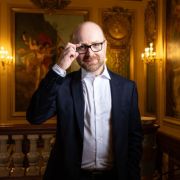
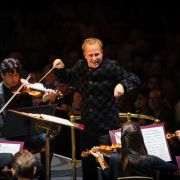
Alain Altinoglu, Music Director of La Monnaie (De Munt) for the last ten years, is in Paris. Christina Scheppelmann, approaching six months as their General and Artistic Director, is at their offices in Brussels. The ebullience, the energy, the sheer delight at working together floods like a torrent through the computer screen – which surprises me somewhat, given quite how recently it is that Scheppelmann took up her role.

In fact, the pair go back a long way. “In the 90s”, Altinoglu explains, “I was a piano repetiteur in Paris – I was not a conductor then – and I was asked to play for an audition for the San Francisco Opera. We were auditioning singers for an Armenian opera, Arshak II by Tigran Chukhajian. Christina was working for San Francisco Opera at the time and we did forbidden things together like smoking cigarettes. So I’ve known Christina for more than 25 years and she invited me to conduct in many places, with the Wiener Staatsoper in Oman, in the Liceu Barcelona, and so on.” Scheppelmann continues: “It has been wonderful to have stayed in touch with Alain, because it has been over many, many years, but we somehow managed to stay in touch and cross paths again.”
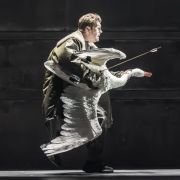
The first fruit of the current collaboration is an eye-catching production this season: Thaddeus Strassberger’s new staging of Berlioz’s Benvenuto Cellini, which opens in January. It was initiated by Scheppelmann, Altinoglu explains: “she came to me and said that Benvenuto Cellini was never played at La Monnaie, and I was shocked – I never thought to look at it, while she did look at it and said ‘I love Berlioz’. It felt very natural. And if she asks me one day for something I’m not keen to do, she knows I will tell her!” Scheppelmann, in turn, praises Altinoglu’s clarity and verve: “It’s easy to work with Alain, because other than being a wonderful conductor, he has an exuberant enthusiasm for what he does, and what he likes or doesn’t like is very obvious. And when he works with the orchestra, that enthusiasm is just fabulous: not every conductor is like that.”


A typical season at La Monnaie has seven productions, in the course of which they try to cover the broadest possible range. Altinoglu stresses their common open-mindedness: “When Christina gives me the names of directors she likes, it’s not only one way of directing. I’m also like that: I like a large repertoire of music. I think it’s important that our audience are able to see different visions of what opera is. La Monnaie was known for many years for being a laboratory of new things, and some of the productions are still going to be like that – but it’s also important to keep the bond with our public, which I think we sometimes lost in the past.”
Scheppelmann elaborates: “We have many tastes in our audience and we are supposed to serve all of those tastes. What’s also important is ‘what will the future repertoire be?’ We will do new pieces, but also restage pieces that exist already: we cannot create repertoire if we only do world premieres. Otherwise I will retire and we will still be playing Tosca, Traviata and Magic Flute, and that cannot be our mission. In order to expand repertoire, you have to play it, and not just once.”
Two of this season’s seven productions are new operas. Grey Filastine’s Ali premiered at Brussels’ smaller KVS theatre in 2024 and was transferred to the main stage in November. Described in our French language review as “an infinitely touching odyssey”, it tells the true story of the voyage of 14-year old migrant Ali Abdi Omar from his terror-riven homeland of Somalia, eventually reaching Brussels. You would be hard pressed to find a hotter potato in today’s political environment, and as Scheppelmann points out, “This has been a topic for the last seven years, not just today. And sadly enough, it will continue to be a topic, because people will probably still be drowning in the Mediterranean in three or four years’ time. I want to do it again, probably in three years, because we had an incredible success with the audience and clearly, the topic is meaningful.”

Another meaningful topic will be found in the season’s other new piece: Iain Bell and Lydia Steier’s Medusa. While we all know of the fearsome woman with poisonous snakes for hair, it’s easy to forget that those snakes have been created by Athene in revenge for Medusa’s rape by Poseidon – a classic example, as Scheppelmann explains, of violence being inflicted on a woman who is then made the perpetrator. An operatic adaptation of J.M. Coetzee’s novel Elizabeth Costello – violence against a woman which is mental rather than physical – is in the works for a future season.
Altinoglu is equally committed to the breadth of La Monnaie’s offerings. “I always say that my job as music director is to conduct all the repertoire possible: I don’t think the music director of an opera house should conduct only Mozart or only Wagner. I don’t conduct Monteverdi because it’s a special orchestra, but we have to present all the repertoire going from Monteverdi to new music.” Although the audience for Ali is generally different from the audience for Mozart or Wagner, he hopes that they can sometimes build bridges and relates with relish the story of when he gave tickets for the Tristan und Isolde he was conducting to his hairdresser, who had never seen an opera in her life – she loved it, but was frustrated that “the story hadn’t been finished” – having left at the end of Act 1 under the misapprehension that this was the end of the whole opera.

Altinoglu’s background is French, but his other musical directorship is of the HR-Sinfonieorchester in Germany – two countries with very different orchestral traditions. So what sound does he get from the La Monnaie orchestra? “Ysaÿe, the greatest Belgian violin player, was a teacher in Liège, and his school of playing is really between Germany and France. It’s the same for the brass: when my brass players go to Germany, they play darker. If they go to France, they think the brass players in France will play more clearly and openly. So there is really a sound which is between these two worlds. And I think it’s important today to try to keep the tradition of each orchestra. I just did Pelléas et Mélisande with the Wiener Staatsoper in Vienna: you cannot change the sound of the Vienna Philharmonic to be like the Orchestre national de France.”


It strikes me that Altinoglu and Scheppelmann are united not just by tiggerish enthusiasm but also by a strong practical streak. Altinoglu will never ask Scheppelmann to perform St François d’Assise or Lady Macbeth of Mtsensk at La Monnaie because the orchestra would never fit into the pit, while War and Peace is out because they don’t have enough dressing rooms. And when I ask if they would like to do more than seven operas a year, Scheppelmann points out other limits of physical space: “Our stage has no side stage and no backstage. So that doesn’t allow us to work in rep: you need to rehearse, load in, run a number of performances, and load out. But I hate to harp on about what we don’t have: we have a beautiful theatre with a wonderful acoustic and it has a lot to offer.”

Whatever he conducts, Altinoglu is famous for the clarity of the orchestral sound he achieves. I ask how it’s done: “One of the main difficult jobs of an opera conductor is to make the balance right between the singer and the orchestra, which is different in every theatre with every orchestra and every set.” Because the acoustics can vary according to the set design and where a singer is positioned on stage, this can require discussions with the stage director, or changing the orchestral dynamics from what’s marked in the score.
Does each of them have a bucket list opera, I ask, one they’ve always wanted to stage? With Scheppelmann granting permission to leak an unannounced item (“the truth is, as soon as a singer has been committed, they put it on their website”) Altinoglu tells us that Wozzeck is coming next season. He also hopes to do Die Frau ohne Schatten in years to come.
Scheppelmann hopes to do the European premiere of Jake Heggie’s Moby Dick (“if nobody snatches it up first”). Her connection to the work goes back to its beginnings: “Months before it was premiered in Dallas, I was sitting with Jake on his piano bench, and he played the whole thing through for me.”
Given their evidently strong connection, one has to suspect that Altinoglu had a strong voice in Scheppelmann’s appointment, but she stresses that “no general director gets picked without a formal search process” (except maybe in Italy, she adds after a pause) “and that’s what happened here. Maybe, to be together here, as Lofti Mansouri says, it’s Kismet.”
The new production Berlioz’s Benvenuto Cellini runs from 28th January to 17th February at La Monnaie | De Munt, Brussels.
The world premiere production of Iain Bell and Lydia Steier’s Medusa runs from 5th–19th May.
See upcoming performances at La Monnaie | De Munt.
This article was sponsored by La Monnaie | De Munt.