Finish in the right place, the practical advice for musicians goes, and the audience will forget any problems that happened in the middle. So it was over the course of the evening at the Chicago Symphony Orchestra this week, where some ravishing Wagner sent the audience home love-potioned, even if they may have forgotten weaker portions earlier.

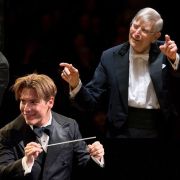
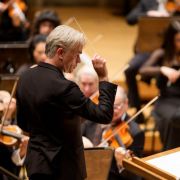
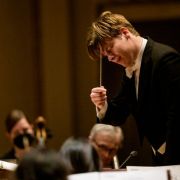
The conductor Jakub Hrůša led the orchestra in a program called “Songs of Love and Farewell,” a title that doesn’t quite hit the nail on the head about what these pieces have in common. The lineup consisted of Janáček’s Overture to From the House of the Dead and Rachmaninov’s Isle of the Dead in a short first half, and Richard Strauss’s Four Last Songs and Wagner’s Prelude and Liebestod from Tristan und Isolde in the second. It’s actually death that unites this collection – the only one without death in its title gives death the literal last word – but maybe euphemizing as “farewell” passed muster with the marketing department better than “Music on Death” would.


Hrůša’s first half felt either underprepared or under-interpreted. The Janáček, drawn from his opera on Dostoevsky’s novel based on his experience in a Siberian prison camp, is a mercurial and busy piece, jumping from texture to texture as Janáček brings characters in and out of the narrative for brief moments. Hrůša pulled less dynamic contrast and less distinct articulations out of the orchestra than the score invited, making the overall affect of the piece flatter than it might be. A shout-out, though, to percussionist Cynthia Yeh for her playing of the prisoners’ chains, making them sound like neither rattles nor cymbals nor a thunder sheet but something distinct.
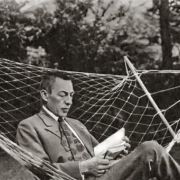
The Rachmaninov, too, seemed sort of brushed past. Quiet passages didn’t get all that quiet, and the straightforward harmonies came off as tame. Tutti accents sounded gimmicky rather than powerful. It felt like filler.

After the intermission, the centerpiece of the program arrived, the longest piece by duration. Strauss’s Four Last Songs were sung by soprano Corinne Winters, whose voice and characterization proved well suited, if timbrally brighter than what most think of as Straussian. In “Frühling” and “September”, Winters rang out lovely high notes, although in her lower registers she was somewhat covered by the orchestra.
From with “Beim Schlafengehen” to the end of the concert, everything went technicolor. Balance was better from the downbeat, and Winters could command attention. She stayed in character even during her rests, casting her glance to the floor by concertmaster Robert Chen’s feet when he had his solo. Winters’s delivery of the word “tausendfach” – “thousandfold,” as in living life fully – was heartbreaking. After “Im Abendrot,” Winters received copious applause and a well-earned curtain call.


Similarly with the Wagner. From the opening statement, Hrůša showed a clear take, starting ultra-quiet with closed, covered tone, and leaving several seconds of silence after the first statement. Then things opened upon the first of the distinctive Wagnerian suspensions. Pianos crackled, fortes roared. The final moment for the oboe tied everything together: the delayed resolutions, the silences, the dynamics. It was stunning in a way that could lead a casual orchestragoer to understand why this music wielded so much influence over the classical music to come.
The second half of the concert was worth the price of admission. But late arrivals didn’t miss all that much.