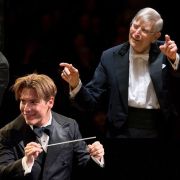
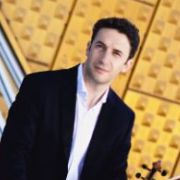
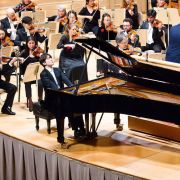
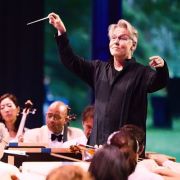
Kirill Petrenko and the Berliner Philharmoniker continued their Carnegie Hall mini-residency with two landmarks of German Romanticism: Brahms’ First Piano Concerto, featuring Víkingur Ólafsson, and Richard Strauss’ Also sprach Zarathustra.

Ólafsson brought his characteristic clarity and intellectual rigour to Brahms’ First Piano Concerto, a work of extraordinary maturity for a composer of 25. Petrenko gave the orchestral introduction an imposing sense of scale, with ominous timpani and dark-toned yet transparent strings. Every detail was audible without disrupting the sweeping dramatic arc. Ólafsson’s first notes emerged naturally from the orchestral texture, while his crystalline touch and effortless command remained evident even in the most demanding passages. For all the refinement of his playing, the partnership was not entirely seamless in the Maestoso. The pianist’s choices occasionally seemed at odds with Petrenko’s broader conception, as when he took the lyrical second subject at a deliberately slow tempo.


The Adagio unfolded with tenderness and melancholy, free of any Romantic exaggeration. The Berliners sustained the movement’s singing lines with a finely judged balance between strings and winds, the clarinet and bassoon adding particular warmth. Ólafsson approached his entrance almost like a Bach chorale, with lucid voicing and contemplative restraint. His long melodic lines were shaped with expressive warmth, his pianissimos exquisitely delicate. Petrenko responded sensitively to the pianist’s phrasing while preserving the movement’s underlying sense of direction.
The finale found soloist and orchestra in their closest accord. Taken at a rather brisk pace, its sharply articulated theme combined rhythmic vitality with symphonic seriousness. Petrenko brought remarkable clarity to the orchestral fugato, allowing each contrapuntal line to register distinctly. Ólafsson’s elegant, tightly controlled virtuosity was matched by the orchestra’s energy and precision, lending the closing pages both brilliance and conviction.
For an encore, Ólafsson turned to the slow movement of Bach’s F minor Keyboard Concerto, his delicate phrasing set against the gentle pizzicato of a handful of Berlin string players. The intimacy and expressive simplicity of their performance made it one of the evening’s most affecting moments.
In Strauss’ Also sprach Zarathustra, Petrenko combined orchestral power with transparency, moving fluidly between dynamic extremes while evoking distinct emotional worlds without making the score sound episodic. The famous sunrise, its trumpet calls resplendent, was imposing without being an isolated spectacle. In Von den Freuden und Leidenschaften, musical lines passed seamlessly between orchestral sections even amid the turbulence. Petrenko’s meticulous handling of the strings’ divisi writing was particularly striking in the fugue of Von der Wissenschaft, as successive desks of cellos and double basses, from fourth to first, gradually enriched the texture. The tension built organically towards the outburst of Der Genesende, whose rhythmic force and orchestral colour seemed like a premonition of Stravinsky’s L’Oiseau de feu.


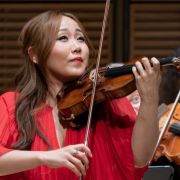
In Das Tanzlied, concertmaster Daishin Kashimoto brought elegance and a touch of nostalgia to his violin solo. The waltz was supple and graceful yet retained a certain gravity. The transition into Das Nachtwandlerlied felt natural. Most extraordinary was Petrenko’s control of the final decrescendo. In striking contrast to the radiant opening, he brought the work to an almost imperceptible hush, allowing the lingering tension between C and B major to suggest the unresolved relationship between humanity’s search for meaning and the natural world at the heart of Strauss’ Nietzsche-inspired score.