From Helsinki, the fastest way to get to Kuhmo is to fly to Kajaani. Then, for the final hop of 100 kilometres or so, there’s no plane, train or motorway. It transforms the journey into a road trip straight out of David Lynch: you follow a narrow strip of tarmac, skirt the edge of vast lakes so still that they seem artificial, cross dense forests of alternating birch and juniper, their trunks tinged pink by an evening summer sun that stays low for a long time in this wilderness so close to the Arctic Circle. It’s then that you discover the spirit of Finland, the country that Elias Lönnrot scoured two centuries ago to gather from bards and people the songs and tales from which he authored the Kalevala, a mythical epic that sits at the foundation of the whole of Finnish culture. Jean Sibelius, amongst others, drew inspiration for many of his compositions from this work and its legendary characters. And it was here in Kuhmo, in 1970, that a chamber music festival was established, which remains to this day a benchmark in Finland and beyond.

On the surface, Kuhmo is a perfectly ordinary little town, with a wide main street along which trucks laden with timber occasionally pass – reinforcing the impression that you’ve stumbled into a Finnish version of Twin Peaks. Kuhmo reveals its true charm on a side street near the lake: a succession of pretty wooden houses, with the raised floors typical of regions that are covered in snow every day during winter. In the gardens, statues of bears attest to the strong bond between the locals and the natural world that surrounds them; numerous trails and observation points for spotting wildlife can be found not far from the town.
It is on this street that you’ll find Juminkeko, an unassuming foundation (there’s no sign to indicate it!) whose main exhibition hall takes visitors through the origins of the Kalevala and the travels of Elias Lönnrot. On the opposite side, a large barn houses a temporary exhibition entitled “Kalevala Reimagined”, which shows that the magic of Lönnrot’s tales is still very much alive for many Finnish artists today. A few metres away, a large banner stands in the middle of a vast outdoor dining area surrounded by nature and framed by a few wooden buildings: this is the heart of the Kuhmo Chamber Music Festival, a place where festival-goers can enjoy a meal or a coffee between concerts, and where numerous morning events are held to bring artists and audiences closer together.


Just like the long summer days (the sun rises at 3am and sets at 11pm in mid-July), the festival spends little time at rest. Almost every day at 11 am, Kuhmo Church – a stone’s throw from the festival headquarters via a small footpath – hosts the first of the day’s four or five concerts. This Lutheran church, with its light-coloured walls and entirely wooden structure, boasts ideal acoustics for both the organ (a beautiful modern instrument) and chamber music. From the very first day, we are treated to a programme featuring Susanne Kujala, who revels in the instrument’s 38 stops in a spectacular Prelude and Fugue on Bach’s name by Franz Liszt. The Pantaleon Trio followed with the work with which Beethoven opened his catalogue (his Piano Trio, Op.1 no.1), played on a beautiful pianoforte belonging to Tuija Hakkila (a former pupil of Jacques Rouvier at the Paris Conservatoire). What a lovely way to open up the audience’s ears before the flurry of concerts set to follow over the coming days!
The festival’s second main venue is 800 metres away, down Kontionkatu street: this is Tuupala School, where the 3pm concerts take place. Concerts in a sports hall? We approach the entrance with a touch of scepticism… before realising that the walls are panelled with wood, providing excellent acoustics – once again, perfect for chamber music! Antti Tikkanen, the festival’s co-artistic director alongside his partner Minna Pensola, takes to the stage barefoot, wearing a T-shirt bearing the festival’s logo, whilst playing the opening notes of Grazyna Bacewicz’s Polish Caprice. Tikkanen skilfully uses the fermata that concludes the first section of the piece to move closer to the microphone and, whilst holding his E harmonic, warmly welcomes the audience – first in Finnish and then in English – who are all beaming at this performance that has surprised them from the outset.

The audience comprises spectators of all ages, not least because the school doubles as the home of the academy attached to the festival. This year, 95 students from Finland and elsewhere (Switzerland, England, Sweden, Hong Kong, the US, South Korea, Japan and more) have enrolled in courses taught by a host of international artists and teachers. It is as though Europe’s leading music schools had sent their finest representatives to the far reaches of the continent: Mi-kyung Lee (who has been teaching the violin at the Munich Hochschule for twenty years) teaches alongside Levon Chilingirian (Royal Academy of Music, London) and Johannes Meissl (co-artistic director of the European Chamber Music Academy).
In addition to its academy, this year the festival is launching a new scheme called Kamarista, designed to support ensembles at the start of their careers by integrating them into the festival programme and offering them masterclasses. Tikkanen and Pensola, as well as being artistic directors of the festival, are also members of the renowned Finnish quartet Meta4, founded in 2001, so I ask them about the new scheme: “As a quartet, we have 25 years behind us now”, they reply in unison. “And we were very fortunate! We were studying in a time where there was much more space for young people to enter the field. With Kamarista, we are trying to open one platform for young groups so that they can come and perform in a festival which is like the world capital of chamber music for two weeks in July.”

I slip in quietly to a masterclass given by Meissl to the Modulor Quartet, one of the two ensembles selected for Kamarista this year. They are performing György Kurtág’s Officium breve, a series of aphorisms that are as technically demanding as they are difficult to bring to life. There’s no doubt about it: these musicians, based in Switzerland (where they trained under Rainer Schmidt of the Hagen Quartet, amongst others), know their material inside out, and Meissl praises them for their musicality. But the professor finds just the right words to highlight a note here, a dynamic contrast there and to transform a sequence of notes into a small poetic masterpiece: “You have the whole universe in one interval,” he explains, looking at the score. The following day, the young quartet is heard on the festival’s main stage performing George Crumb’s remarkable Black Angels – a sort of Apocalypse Now for string quartet. They receive an ovation, just like the great artists before them and those who will follow.


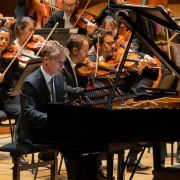
A word about the festival’s main venue. It’s situated at the other end of Kontionkatu street, within the Kuhmo Arts Centre, and it is one of the world’s finest concert halls for chamber music: its humane proportions (668 seats), its timber-clad architecture – whose undulating lines and tiered layout give the impression of stepping into a dream library – and its excellent acoustics make it a true gem, the stuff of any chamber music lover’s dreams. It is here that most of the concerts take place, featuring artists who deserve to be booked more often in the major venues on the other side of Europe. Particularly noteworthy is the brilliant clarinettist Lauri Sallinen, superb in both Donatoni and Mozart’s Quintet, and the fantastic Sergey Malov, equally at ease on the violin in Mendelssohn’s rare Concerto in D minor for violin, piano and orchestra as on violoncello da spalla in Anssi Karttunen’s arrangement for string trio of Beethoven’s “Spring” sonata.

But the festival does not merely invite talented musicians; it stands out for its delightful, concept-driven programmes that span genres, eras and geographical regions. One such was the mouth-watering “Adults Only” evening, featuring Erwin Schulhoff’s radical Sonata Erotica, Edvard Grieg’s Erotyk. Or the grand “Ritual” concert, featuring John Adams’ Shaker Loops and Stravinsky’s The Rite of Spring in its version for piano four hands, truly danced across the keyboard by Tuija Hakkila and Anna Laakso. Listening to this pagan rite, conceived by Stravinsky from traditional melodies, I’m reminded of Lönnrot and the magical, ancestral poetry of his Kalevala. The day before, after walking along the lakeshore beneath the birch trees, I had felt a shiver upon hearing Kaija Saariaho’s Papillons performed by Tuomas Lehto. There’s no doubt about it: the air in Kuhmo contains something special and hard to put into words – something that allows the spirit of Finland and the spirit of chamber music to express themselves better than elsewhere.
See more on Kuhmo Chamber Music Festival.
Translated from French by David Karlin.
This article was sponsored by Kuhmo Chamber Music Festival.