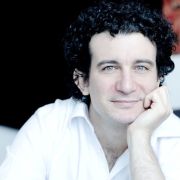
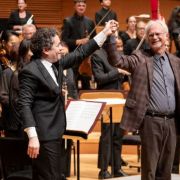
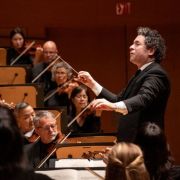
Gesamtkunstwerk is alive and well in Los Angeles. Gustavo Dudamel and the LA Phil brought Wagner’s Die Walküre to Walt Disney Concert Hall this week as one of their last programs during the Music Director’s departing season. With one of the most famous farewells in opera, Walküre is a fitting choice, particularly after the enticing creative success of Das Rheingold in 2024. This sequel was worth the wait.

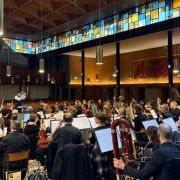
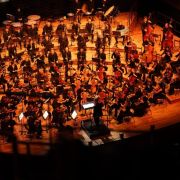
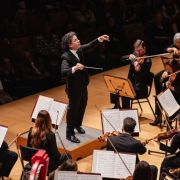
Wagner’s first opera proper of the tetralogy is one of the most masterful examples of dramatic pacing in the entire repertoire. The LA Phil performed one act per evening, spreading the piece over three nights. Each evening was an enticing occasion despite the extended intermissions. In glamorous Los Angeles, that is saying something. The transformation of the Disney Hall stage to a multi-tiered space brings the aforementioned Gesamtkunstwerk frighteningly close, with singers just a few feet away from the audience. The entire project is a touching tribute to the late Frank Gehry, who conceived of the scenic design and whose hall will continue to dazzle and evolve for years to come.


The largest performing platform was at the height of the top of the choir loft, the orchestra center stage with a slightly raised proscenium in front of it. The platform included raised blocks on both sides to add more vertical expanse. In Walküre, one can be forgiven for noting the lack of outright physical action over three-plus hours. The drama is propelled by dialogue, conflict, anguish and rapture. In theory, the lack of physical space shouldn’t be a detraction. But in some ways, the scale of the drama, not to mention the scale of the music itself, requires the diminution of the characters: the gods who are powerless in the world they have set in motion.

In Dudamel’s reading, that world was a crucible. Lines surged forward, segueing to the next. There was little silence or push and pull resulting in relatively quick timings. The rise and fall of the conductor’s pacing made the ecstasy of the finale of Act 1 or Sieglinde’s “O herstes Wunder!” rapturous, but Dudamel's climaxes were brisk, the lead-ups rushed, lessening their impact. The Phil played with beautiful control, highlighted by outstanding solos, but rarely seemed to have a moment of spontaneity, where time stood still, or the power of the playing kicked into a higher gear. This could have supported Dudamel’s swift pacing.
Vocally, Christine Goerke’s Brünnhilde lived up to expectations with her thrilling, broad soprano soaring over the orchestra. Her voice consists of formidable high notes and sumptuous middle and lower registers that gave her Valkyrie a fierce edge which she reinforced with dramatic intensity. Ryan Speedo Green was a gruff, imposing Wotan. His stentorian voice lacked sustained lines, sacrificing some of the character’s sympathy in moments such as “Der Augen leuchtendes Paar,” but he was also occasionally overpowered by the orchestra.

The Völsung twins were captivating. Jamez McCorkle’s tenor is distinctive, with a baritonal core and secure high notes. His sustained cries of “Wälse” were thrilling and his telling of his origin story affecting. Jessica Faselt’s Sieglinde was sympathetic. Her lyric voice made for a touching portrayal of her tragic character. Bass Soloman Howard was a menacing Hunding, singing with an imposing presence. Local favorite Sarah Saturnino was a spiteful Fricka, with a powerful voice to match. The eight Valkyries were a shattering aural presence in the third act.


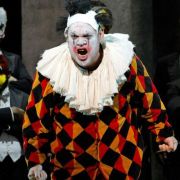
Alberto Arvelo’s direction highlighted the conflict, and the singers complied with heart-on-sleeve gestures, but the depth of the characters’ dilemmas was missing. However, they used the space effectively, often to thrilling effect. The sword fight in Act 2 was well-executed, particularly given the tight space. The lighting design by Shutter Cut Lighting Design (a notable personnel change from Rheingold) projected moods on the stage in a dynamic, if unspecific, series of colors on large cloud-like textures across the front of the hall. Matching white horses filled the stage on the third night. Cindy Figueroa’s costumes glittered for the deities and Valkyries, and were rustic for the mortals, futuristic but timeless.

After the success of Das Rheingold two years ago, I suggested Walküre was an exciting prospect. The uniqueness of this project and the innovative and compelling quality of the performances, should demand that Dudamel, in his newest title of Diane and M. David Paul Artistic Cultural Laureate of the LA Phil, return to complete the cycle. In Wotan’s words, “Denn wo kühn Kräfte sich regen, da rath' ich offen zum Krieg” (For where bold spirits are moving, I stir them ever to strife). Dudamel is equally called elsewhere, but it’s hard to imagine his new post in New York standing in his way.