

One of classical music’s great ‘what ifs’ concerns Shostakovich. What might he have written had the infamous Pravda denunciation of The Lady Macbeth of Mtsensk in 1936 not cast its long shadow over his subsequent career? His First Piano Concerto, composed in 1933, offers a dizzying glimpse of the direction not taken. Here we have a mind working at full throttle. Hyperactive, restless and emotionally ambivalent, the music hurtles between circus antics and darker psychological territory, sometimes at such breakneck speed that it seems in danger of overtaking itself.

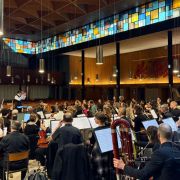
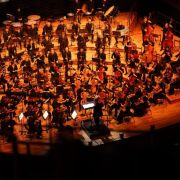
Charles Richard-Hamelin was exceptionally responsive to Shostakovich’s mercurial shifts. The Roy Thomson Hall acoustics tend to mellow out the piano sound, but he turned this to his advantage, achieving a seamless blend with the Toronto Symphony Orchestra, while solo trumpeter Steven Woomert’s biting interjections cut through with delicious irreverence. Beneath the first movement’s slapstick sarcasm, darker shadows were never far away. The Lento brought a different kind of unease: melancholy and stillness disturbed by the piano’s disquieting gestures, the muted trumpet adding its own haunting commentary. The finale became a gloriously Chaplinesque chase, Richard-Hamelin himself playing itself briefly coming off the rails towards the end – though in music so determined to outrun itself, even this seemed weirdly in character. Throughout, Gimeno and the orchestra’s string section illuminated the contrapuntal writing without sacrificing its emotional weight.


Mozart’s Symphony no. 39 in E flat major offered another glimpse of seemingly inexhaustible creative energy, albeit under more mature, Classical control. One of three magnificent symphonies composed within a few months in 1788, apparently without commission, it emerged here as a work of irrepressible theatrical imagination. The grand slow introduction, crowned by majestic brass, sounded almost like a poker-faced joke in light of the Figaro-esque dramatic gusto and impeccable comic timing that followed.
Gustavo Gimeno’s conducting was characteristically focused, yet allowed ample room for subtle shaping, playful inflection and spontaneous wit. The Andante flowed gracefully, its elegance never wholly concealing a mischievous streak. The Minuet had a delightful lift and lilt, with a rustic, Ländler-like freshness, while the finale fizzed with invention, Mozart’s deceptively simple, scale-based theme becoming a source of endless teasing. The orchestra responded with exhilarating unanimity.
Sofia Gubaidulina’s Fairytale Poem (1971), which opened the concert, made a more subdued impression. Inspired by the story of a piece of blackboard chalk longing to draw castles and gardens rather than mere words and numbers, the score explores delicate, often tentative combinations of orchestral timbres. Only when a boy finally fulfils the chalk’s dream does the orchestra briefly erupt in an ecstatic tutti, before fading away as the chalk itself dissolves. Overall, the music felt more like a succession of sketches than a fully realised narrative – perhaps one better suited to accompanying an animated film. The audience’s lukewarm response suggested that, unlike the little piece of chalk, the music had not quite managed to realise its dreams.