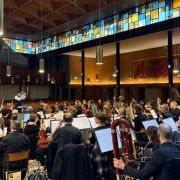
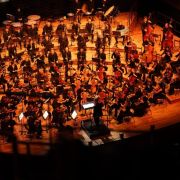
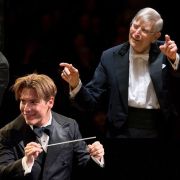
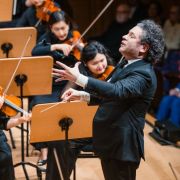
As part of the citywide festival, ‘United in Sound: America at 250’, celebrating the 1776 founding of the US, the Met Orchestra was back in Carnegie Hall for the first time this season, with Yannick Nézet-Séguin leading an all-American program of 20th-century works, all written within a span of 30 years. The evening opened with William Levi Dawson’s rarely heard Negro Folk Symphony. The Philadelphia Orchestra’s 1934 New York premiere performance, under Leopold Stokowski, reportedly brought the Carnegie Hall audience to its feet, and the music received critical acclaim as well. Despite this immediate success, the work fell into oblivion – until a 1952 trip to West Africa inspired the composer to reshape the score. Stokowski recorded the revision in 1963, as did the Detroit Symphony in 1992, but for the most part, Dawson’s masterwork has been largely neglected.


The 35-minute composition draws heavily on Black spirituals, successfully integrating them into the symphonic fiber. An ominous, distinctly Dvořákian, horn solo – symbolizing, in Dawson’s words, the missing link “taken out of a human chain when the first African was … sent to slavery” – opens The Bond of Africa first movement and reappears throughout the work. The music swiftly advances into a series of swaying rhythms, often high-spirited, always intense. After three soft gong-like strokes, the constantly shifting moods of the complex central movement, Hope in the Night, alternate between mournfulness and optimism, representing “the characteristics, hopes and longings of a folk held in darkness.” The largely jubilant finale, O, Le’ Me Shine, Shine Like a Morning Star, achieves increasing forceful momentum with a colorful battery of percussion before coming to a slam-bang end. Under Nézet-Séguin’s energetic baton, the ensemble produced a memorable, powerfully passionate account, capturing all the work’s technical brilliance and emotional depth.

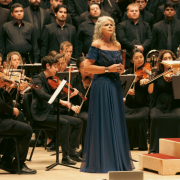
Next, mezzo-soprano Isabel Leonard joined the orchestra to perform Knoxville: Summer of 1915, Samuel Barber’s lushly textured setting of James Agee’s 1938 prose poem presenting a child’s view of a tranquil summer evening in a small Southern town. Though considered a soprano staple – it was commissioned by Eleanor Steber, who premiered it with the Boston Symphony under Koussevitsky in 1948, and popularized by Leontyne Price’s 1969 recording – Leonard’s opulent and expressive voice had no trouble handling the work’s expansive, often high-lying passages. With Nézet-Séguin setting a not-too-fast tempo to match the mostly languid rhythms of the text, she and the orchestra created a dramatic and magically dreamlike atmosphere.


The second half of the evening was taken up by the music of Leonard Bernstein. It opened with Leonard delivering a movingly sung but orchestrally overpowered performance of the brief, but ever popular ballad “Somewhere” from West Side Story.

The evening ended on an appropriately exuberant note with Fancy Free, the first of Bernstein’s landmark collaborations with choreographer Jerome Robbins. Composed in 1944 and set in a wartime New York City bar, the upbeat, brashly irreverent ballet tells the story of three American sailors on a 24-hour shore leave as they vie for the attention of two young women. Played on its own, without recourse to theatrical scenery or Robbins’ choreography, the music sounded astoundingly fresh and vital as Nézet-Séguin and his musicians conveyed all the boisterous energy, rhythmic irreverence, and narrative wit in Bernstein’s jazzy all-American score.