A monumental event happened in Atlanta over the course of last week: the conclusion of Atlanta Opera’s ambitious presentation of Wagner’s Ring cycle. One installment has been performed over each of the last four seasons, culminating in the marathon-length Götterdämmerung. It counts as the first new American production of the cycle post-pandemic, and the first complete Ring performed in the American South – a testament to the region’s increasingly growing cultural influence. Recently announced are two performances of the tetralogy in succession as Wagner intended, slated for June 2029 – by which time Atlanta Opera will be moved into a brand-new venue.

The presentation of this cycle was the ambitious brainchild of Israeli-born stage director Tomer Zvulun. Zvulun counts as a mentor the recently deceased Speight Jenkins, highly regarded amongst Wagnerians for his tenure at Seattle Opera, and the performance was dedicated to his memory. Visually striking from start to finish, the Atlanta production skillfully balanced traditional imagery without pushing too hard to be novel, while still embracing modern technology and social relevance. Projections designed by Erhard Rom were cast on a massive canvas that spanned the stage, digitally realizing some of the composer’s more complicated stage directions and pushing past the limitations of physical props.


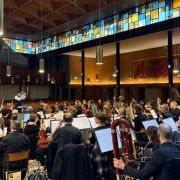
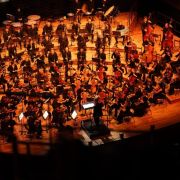
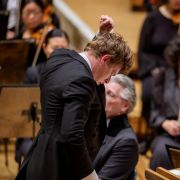
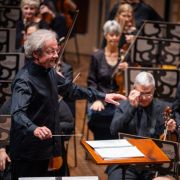
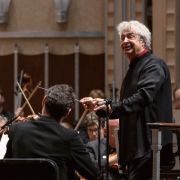
From the opening chords, one was transported into Wagner’s rarefied realm, a sublime ethos sustained for over five hours. Complex orchestrations and long passages for orchestra alone demand a top-tier ensemble. Marshalled by conductor Roberto Kalb, the 81-member strong Atlanta Opera Orchestra delivered magnificently in a performance inspired and idiomatic. The projections added a visual spectacle to the orchestral interludes. During the robust performance of Siegfried’s Rhine Journey, the stage shimmered with images of the river and dancing cascades.

It’s hard to overstate the Olympian stamina required of the two lead roles, Siegfried and Brünnhilde. Stefan Vinke’s Siegfried was heroic yet a bit understated, both a powerful force and down to earth. Though this is a man who slayed dragons and rescued Brünnhilde from a fiery mountaintop, here he seemed deeply human and vulnerable. This was a production that favored broad, relatable archetypes over obscure mythology.
As Brünnhilde, Lise Lindstrom was a force to be reckoned with. Piercing and impassioned, she soared above the orchestra with the whole spectrum of human emotion. She was particularly arresting during the emotionally fraught (perceived) betrayal. A love duet between the couple in the Prologue – a moment of peace before the tragic end was set in motion – showed the electric chemistry of the leads.

The first act took us to the court of the Gibichungs and introduced the central villains. The Brutalist geometry of the set design gave unmistakable fascist undertones, offering a certain political resonance and relevance, highlighting the theme of power and corruption. Hagen is a particularly cunning antagonist, and David Leigh cut a towering presence. Just as imposing was Le Bu as Gunther, who alongside his sister Gutrune (Sylvia D’Eramo) was manipulated to do Hagen’s bidding. Aleksey Bogdanov made a brief appearance as Hagen’s father, Alberich – the man who catalyzed the whole plot of the cycle by stealing the ring. Bogdanov was chillingly persuasive in a plea to kill Siegfried in order to reclaim it.


The first vocal appearances were from the Three Norns (Tamara Mumford, Olivia Vote, Caitlin Lynch) who foretold catastrophe with eerie prescience. In addition to singing the First Norn, Mumford served as Brünnhilde’s sister Waltraute, desperately appealing to her to return the ring back to the Rhinemaidens. The Rhinemaidens themselves reappeared in Act 3, a callback to the first opera. The trio (Cadie J Bryan, Alexandra Razskazoff, Gretchen Krupp) were in harmonious blend, and somewhat coquettish toward an undeterred Siegfried.

The chorus, prepared by Walter Huff, gave forceful strength to the Gibichungs. Siegfried’s eventual murder was especially haunting, set up in cruel fashion by a haughty drinking song. The tragic though majestic Funeral March showed the orchestra at their finest; a luminous projection of the moon cast above the funeral procession is an image I won’t soon forget. Things could only go up in flames from there, and a torch-bearing Brünnhilde ignited the final immolation scene. Searingly dramatic and with glorious orchestration to boot, it reached a close worthy of both Wagner's massive conception and Atlanta Opera's extraordinary undertaking.