“Fairytales come to life” announced the heading of the concert guide for last week’s performances of the Sydney Symphony Orchestra. Certainly, several pleasant surprises awaited the audience, ready to listen to a weighty, all-Russian programme conducted by Andrey Boreyko with soloist, Maximilian Hornung, both appearing with the SSO for the first time.

I had never had the chance to hear the seldom programmed Kikimora by Anatoly Lyadov before. A compact, expertly written masterpiece of impressionistic tones, murmuring phrases, coloured by muted glissandi on violins, celestial celesta interjections and some gorgeous English horn solos, with a witty, throwaway ending, it deserves to be played and heard more often.


Shostakovich’s First Cello Concerto used to be considered an almost insurmountable peak of the cello repertoire (until he composed another summit, his Second Cello Concerto). These days, thankfully, it forms part of the standard selection for high-end cellists. Boreyko is also intimately familiar with the work, having conducted it with none other than Mstislav Rostropovich as the soloist a few decades ago.
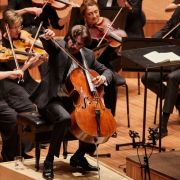
This time, he guided the orchestra assisting the youthful energies and refined playing of his soloist. In utter concentration, Hornung began the concerto with a focused but somewhat raspy sound. This came at a price though, as his gritty tone denied some of the shine of his otherwise magnificent playing. Technically, his performance was beyond reproach, looking comfortable, even tranquil, with perfect intonation and an absolute command of his instrument. He expressed the agitated feelings of the first movement with a relentless energy, which restricted the necessary phrasing of the themes and, significantly, did not permit orchestra and conductor much more than to follow him in a slightly diminished role.

Boreyko conducted much of the slow movement with sensitive care, without his baton, and the cello solo also mellowed, allowing rubato to make his statements personal and touching. The return of the main theme on perfectly played artificial harmonics then sounded truly spooky – as it should. The third movement is a massive and extremely demanding cadenza, built up from barely audible murmurs until its climax of pained screams, with harsh pizzicato chords, terrific melodies in perfect double-stop counterpoints and rapid runs covering all strings of the instrument in between. It all inexorably led to the manic final movement, conquered by Hornung without any hint of fatigue, although the orchestra covered his sound quite often.


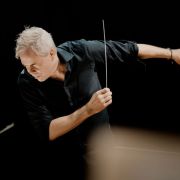
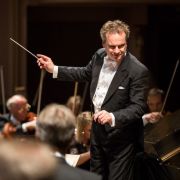
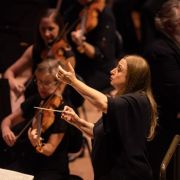
The complete Firebird ballet by Stravinsky finished the programme, featuring massive orchestral forces with three harps, piano and celesta and even four Wagner tubas in the off-stage band. Keeping it all together, Boreyko did a marvellous job. There was something appealingly ‘different’ in his conducting, perhaps hints of an Eastern-European tradition mostly now gone, a constant desire to serve the music and help the orchestra with (often) unique hand gestures, combined with a terrific technique and a solid command of his score. Unlike some conductors on their debut with a famed orchestra, he did not meekly follow the ensemble but added to the colours and tempos and characters with expressive movements. This resulted, for example, in many unusually soft effects, as in the Daybreak section, and in finely executed and accompanied instrumental solos. All in all, in a multi-coloured, subtle reading of a score that even its composer described as “wastefully large”. The Sydney Symphony’s powerful sound all came to the fore in the irresistible Infernal Dance, leading the magical narrative to a wonderful fulfilment.