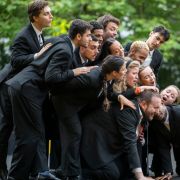
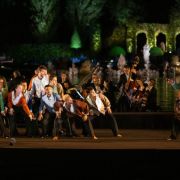
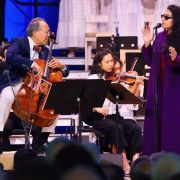
Time was when Monteverdi’s madrigals were performed with an almost liturgical solemnity. For four decades, William Christie and Les Arts Florissants have been in the vanguard of restoring vitality and immediacy to this music so their return to Jordan Hall under the auspices of the Boston Early Music Festival afforded listeners the opportunity to hear their most recent take. With the addition of pedagogical wings to his organization, Christie now has at his disposal an impeccable company of artists well-versed in the most up-to-date historically informed performance practices. Titled “The Magic of Monteverdi”, the program featured compositions running from the composer’s 19th year to his 71st, some with instrumental accompaniment (harpsichord, two violins, viola cello, bass and theorbo) some a cappella and all involving anywhere from one to six singers.


Tenor Bastien Rimondi got things off to a festive start with Volgendo il ciel, celebrating the reign of Emperor Ferdinand III and inviting all to sing, dance and rejoice. Baci soavi e cari and Ecco mormorar le onde (to a text by Tasso), the earliest madrigals on the program written when Monteverdi was barely into his 20s, showcase how well he wove polyphony into textures capable of expressing a variety of emotions and painting a variety of scenes from murmuring waves to rustling leaves and a hint of birdsong They also displayed a hallmark of the ensemble’s skill with the polyphony, blending then tapering the sound down at the end of a madrigal until all the voices sounded like one.
The highlight of the first half, however, was the Lamento della Ninfa with the trio of two tenors and a bass-baritone (Rimondi, Paul Agnew and Edward Grint) narrating and commenting while Ana Vieira Leite lamented the betrayal and loss of her lover while yearning for the way things were. Not only was this well sung, it was well acted and with an intensity worthy of a scene from one of Monteverdi’s operas. The following two madrigals – Sfogava con le stelle and Sì ch’io vorrei morire – date from Monteverdi’s time in Mantua. In contrast to the Lamento, they expressed the tumult of carnal attraction, the latter more overtly erotic with its throbbing phrasing and possible play on the double meaning of morire. The first half closed on a peaceful pastoral note with the entire ensemble amongst the elms and streams of Arcadia, a spot which languidly evokes Thyrsis’ love for Clori.


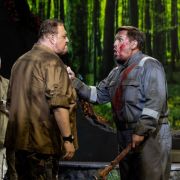
High drama anchored the second half with Agnew giving a masterclass of singing and acting in Il Combattimento di Tancredi e Clorinda while Zefiro torna (to a text by Petrarch) revealed a Monteverdi adept at using dissonance to surprising effect and the ensemble of five singers layering it in arresting fashion. As the program began so it ended with an infectious, toe-tapping Tirsi e Clori inviting us once again to dance and celebrate.
What continues to stand out with Christie and his group is their unity of purpose and total commitment in bringing Monteverdi to life in a way which likely wouldn’t shock 17th-century ears and definitely enthralls those of the 21st. If you are unfamiliar with Monteverdi or have never really “got’ him, seek out the BEMF’s stream of this concert. It’s a good introduction to the composer and you could easily fall under his spell. For those already fans, you’ll find it pure magic.