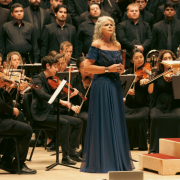
Gustavo Dudamel opened his tenure as the 27th Music Director of the New York Philharmonic with a sensitively curated, splendidly performed program tracing a journey from tragedy to triumph. Five months after the 9/11 terrorist attacks, the Philharmonic and Lincoln Center co-commissioned John Adams to create a work marking the event’s first anniversary. The result, On the Transmigration of Souls, premiered at Avery Fisher (now David Geffen) Hall on 19th September 2002, conducted by Lorin Maazel. After four performances, captured in a triple-Grammy-winning recording, the orchestra never revisited the piece – until this evening, the first subscription concert of the 2026-27 season.

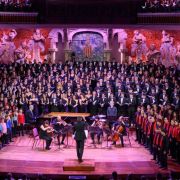
Instead of a traditional musical narrative, the Pulitzer Prize-winning piece builds what Adams calls a “memory space”, a complex, multilayered setting merging electronic tracks with live orchestral and vocal elements. Over 25 minutes, the combined forces of the orchestra, NY Philharmonic Chorus and Brooklyn Youth Chorus seamlessly emerged from and dissolved into a collage of pre-recorded city sounds (footsteps, traffic, sirens) and voices speaking the names of the missing, creating an emotionally moving, physical reality of lower Manhattan after the attacks. The choruses sang throughout with beautiful tone and clarity and, under Dudamel’s baton, the orchestra demonstrated extraordinary polish and power, creating fluctuating waves of tension and texture that enveloped the audience throughout Geffen’s vast acoustic space. When Dudamel invited Adams on stage for bows, the audience gave the composer an especially warm and extended ovation.


Next came the world premiere of Zosha Di Castri’s Invisible House, a co-commission by the Philharmonic and the Los Angeles Philharmonic. The vibrantly kaleidoscopic 15-minute piece – inspired by the Canadian composer’s Ukrainian heritage and her great-grandfather's life – merges folk melodies and verses by Ukrainian-born poet Ilya Kaminsky to glorify humanity’s resilience and art’s ability to sustain us in troubled times. The title comes from the first stanza of We Lived Happily During the War, Kaminsky's poem about moral complacency during wartime and the disconnect between wealthy, peaceful nations and the global violence they ignore. Dudamel conducted an exhilarating account of the multilayered score – brassy, bright, percussion-heavy passages contrasted with moments of utmost simplicity from the strings. The music was alive and pulsing with erratic energy throughout.

Then came Prokofiev’s monumental Fifth Symphony. Written in 1944, it balances wartime trepidation with a glorious celebration of the human spirit. At its January 1945 world premiere in Moscow, conducted by the composer, distant artillery fire celebrating Soviet military victories could be heard, and Prokofiev issued a statement at the time saying that he envisaged the work as a “hymn to free and happy Man”.
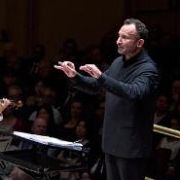
Dudamel was very much at home with the symphony, which he programmed in his 2007 Philharmonic debut. Conducting from memory, he brought out all the color and character in Prokofiev's opulently orchestrated work. He established a wonderfully soft atmosphere in the opening of unusually slow-paced first movement Andante, with the antiphonal setup of the strings (second violins to the right, double bases to the left) producing an intimate, dialogue-like effect. The melodic sounds of the low strings and winds were particularly haunting as the music transitioned to the emphatic coda. The feverish Allegro moderato second movement was precisely paced, highlighting Prokofiev’s ironic humor and biting sarcasm. The most successful music-making of the evening came in the deeply felt Adagio third movement, as Dudamel traced out the long, unfolding cinematic lines with masterly control. The Allegro giocoso finale was full of energy, with the maestro keeping everything in focus from start to the frantic and triumphantly explosive end.