A superficial glance at Ensemble 360’s Sheffield programme may have led a casual observer to think that this was a concert of restricted range, consisting simply of Mozart quintets. Nothing could have been further from the truth. The string players of the ensemble, alongside Manchester Camerata’s Principal Viola, Alex Mitchell, provided almost impeccable support to the evening’s wind players, Naomi Atherton (horn) and Robert Plane (clarinet). We began in joy and ended, via the serene lyricism of the Clarinet Quintet, and the depths of sorrow in the G minor String Quintet’s third movement, with something akin to consolation. It was a journey that revealed conclusively that Mozart at his finest comes close to perfection, which these players came within a whisker of delivering.


The Horn Quintet in E flat major is, like all Mozart’s writing for the instrument, immense fun. If the piece lacked the profundity of what followed, Atherton’s agile solo horn playing highlighted its lively ‘open air’ quality – a horn concerto in chamber disguise, with an especially challenging finale – but the addition of a second viola brought warmth and richness too, especially in those moments where their harmonies supported the solo horn line.
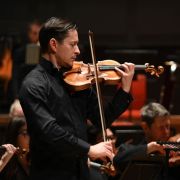
To move from this to the autumnal glow of the Clarinet Quintet in A major, however, was to move from outdoor rusticity and instead embrace the emotional complexity of Mozart’s great operas. Plane has clearly played this work many times, and is obviously in love with its tender, singing qualities. His was a performance of seeming effortlessness – ‘seeming’ because he was clearly alert to the work’s shifting moods – and one in which, as primus inter pares, he shared the limelight, notably with Benjamin Nabarro’s first violin. There was so much to enjoy here. The slow movement’s muted strings created a mellow backdrop to the clarinet’s song, and those moments in which first violin and clarinet took it in turns to decorate each other’s slow unfolding melodies with gossamer-light rising scales were beautiful indeed. Special mention too for the first, strings-only, Trio section in the third movement, where a shift to the minor key temporarily shrouded the sun. In the finale, the performers played with our emotions, especially thrillingly in the shift from the plangent melancholy of the slow penultimate variation – where Rachel Roberts’ viola took the leading role – into the effervescent closing bars. The performers beamed at each other as they basked in the applause.


Mozart’s late string quintets are, by general consent, his greatest chamber works. The one that concluded this concert, the String Quintet in G minor, is perhaps the finest of all. For three of its four movements Mozart’s work seems haunted by the death's shadow – in this case almost certainly the imminent demise of his father, Leopold – and Ensemble 360’s string players responded almost viscerally to its brooding intensity. From the outset, where first violin and first viola exchange the plaintive, broken opening melody, there was almost no respite for the audience. The apparently innocently titled Menuetto was no polite dance; instead its poise was persistently interrupted by anguished off-beat diminished chords that the players dug into with disruptive force. But it was the slow movement, muted strings fuelling the desolation, that compelled the audience most forcefully to stare despair in the face. The finale took its enigmatic course – light relief? ironic evasion? – but by the end the audience knew they’d been on the most compelling of journeys, of the sort only Mozart at his most profound can provide.