

Right after her opening set, Jamie Barton had a little fun explaining the theme of her autumn recital tour. “We do what we want! And what we want is music we absolutely love.” With a characteristically irreverent touch, she dubbed the first half the “classical music” part of the programme, then teased the audience about the mostly unfamiliar composers to come: “The second half is where it’s at!”

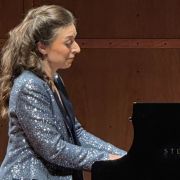
Barton performed with Kathleen Kelly, her longtime recital collaborator, in Tagney Jones Hall at Seattle Opera’s Opera Center. With just over 300 seats, the hall is unusually intimate. Barton has a wonderfully natural way of drawing an audience in, whatever the size of the house. Her expressions were often priceless – especially the sly glances she threw Kelly’s way.


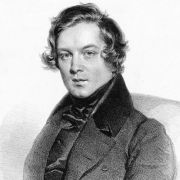
She began with four of Henri Duparc’s sumptuous mélodies, steeped in poetic dreams of escape and sensual longing. Barton found a story to tell in each. In L’Invitation au voyage, Baudelaire’s imagined haven of luxury and calm felt almost tangible, while Phidylé conjured the languorous anticipation of an ardent kiss. Barton’s lustrous voice glowed in its warm, full lower register but could soar into the heights like a balloon released from its tether. Her legato was superb, and she found individual colours and inflections for the words, adding her own expressive touches to the composer’s word painting. Clara Schumann’s Six Lieder, Op.13, offered a delightful variety of moods, from Heine’s melancholy poems of lost love to more buoyant, sunny music, with nightingales, flowers and moonlight.
Yet for all Barton’s irreverence toward heavy-handed recital themes, the “classical” half was no random assortment. Duparc’s French reveries and Schumann’s German Romantic songs seemed to comment subtly on each other before Camille Saint-Saëns brought us back to France for the seductive lyricism of Dalila’s “Mon cœur s’ouvre à ta voix”. Kelly, playing a Yamaha grand, caught the swell of the billowing piano figurations and gave the aria a lingering, poignant afterglow.
After the Romantic longing of the first half came a bracing dose of American frankness and irreverent humour. Libby Larsen’s Love After 1950 offered five different takes on love and desire, from the hazy summer-night memories of Rita Dove’s Boy’s Lips to decidedly less innocent territory. Big Sister Says, 1967 made hilarious business of the painful rituals of keeping oneself beautiful; The Empty Song turned an empty shampoo bottle into a breakup lament. With styles ranging from blues to torch song, honky-tonk and tango, Barton relished the irony and self-mockery.


Melissa Dunphy’s three settings of Nikita Gill poems confronted trauma and the struggle to heal, with imagery of nature and renewal unexpectedly recalling Duparc and Clara Schumann – though seen through 21st-century eyes. Barton gave full weight to the anger and hurt, but also to their fierce determination to survive.
A playful final set billed as Cat Songs let Barton indulge her cabaret and Broadway instincts. In Jake Heggie’s In the Beginning, she and Kelly played cleverly off each other, Kelly knowing just when to jump in and when to let a joke hang. Gabriel Kahane’s God’s Perfect Killing Machine recalled the miniature literary experiments of pre-Musk Twitter; Gary Schocker’s Mama Called became a hilarious piece of sung stand-up, with Barton spinning an entire story out of a telephone call. And Zina Goldrich’s The Alto’s Lament let Barton gleefully air the grievances of altos forever passed over for plum roles, with Kelly an equally mischievous accomplice.