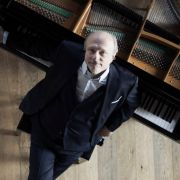
Marc-André Hamelin’s solo recital at Cleveland’s Severance Music Center brought together four strikingly different visions of the piano sonata. Spanning nearly two centuries, the program showed the remarkable durability and malleability of the form in an evening of distinction and contrasts. Haydn was perhaps the most logical place to begin, as much a progenitor of the piano sonata as of the string quartet or symphony.

The D major sonata (Hob 37) made for a particularly zealous opener. Sprightly grace notes decorated the right hand to delightful effect, and Hamelin’s sterling technique yielded a reading of both buoyancy and clarity. Yet the pianist also teased out its dramatic potential, showing that in addition to its joy, this was music of real depth. Improvisatory flourishes marked the slow movement ahead of the spunky but all too brief finale.


Beethoven’s Piano Sonata no. 3 in C major made a fascinating counterpoint to Haydn. The Op.2 sonatas (touchingly dedicated to Haydn) were Beethoven’s first entries in the genre he would redefine, already expanding its possibilities by casting them in four movements rather than the traditional three. A tender gesture in thirds began, only to burst forth with drama. Hamelin didn’t hold back in giving this work a markedly different feel than Haydn, leading to the first movement’s bold, fiery coda. The expressive and expansive slow movement was one of poignant beauty, and the Scherzo that followed was heightened by sweeping arpeggios ahead of the wide-ranging finale that closed the first half with vigor and panache.
Following the Austro-German selections, the latter half of the recital shifted eastward. Though Polish born, by the 1960 composition of his Piano Sonata no. 6, Mieczysław Weinberg was firmly established in Soviet musical life – and counted Shostakovich a close friend and ally. Hamelin reportedly has a recording of Weinberg’s piano music in the pipeline, and as ever, proved a keen guide in the unfamiliar.
A compact work in two movements, it began with tone clusters that pealed like cathedral bells, resounding with piercing severity. The music was distilled to a gentle lyricism, sparse and enigmatic, before the bells tolled again. In the closing movement, terse, spiky gestures built to ferocious complexity. Rhythmically driven in a manner recalling Prokofiev, it reached an imposing close.


Rachmaninov’s Étude-tableau in E flat minor made for an impassioned warmup to the composer’s Second Sonata. Lush chords piled on for maximal pianistic density, yet never to the detriment of a deftly shaped melodic line. A rapid descent to the bottom of the keyboard made for an electrifying opening to the sonata. With coloristic virtuosity, Hamelin gave this emotionally-fraught work a supercharged outing, from shattering tragedy to rapturous lyricism, showing that commanding technique can be used for a seriousness of purpose.
Hamelin treated the enthusiastic audience who ventured out on a rainy evening to a trio of encores. Debussy’s Général Lavine – eccentric was stylish, and yes, eccentric. The same composer’s incandescent Feux d'artifice (Fireworks) made a particularly strong impression. Hamelin as composer had the final word in his own work Music Box that dates from his student days, a miniature as clever as it was charming.