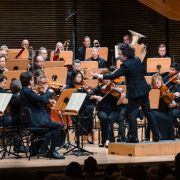
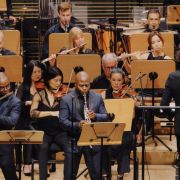
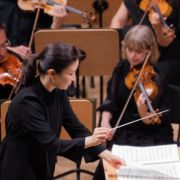
In an age of shortened attention spans, Bruckner’s nearly 90-minute Symphony no. 8 is as much of a challenge for an audience as for a conductor and orchestra. Yannick Nézet-Séguin and The Metropolitan Opera Orchestra rose to that challenge in one of their annual summer Carnegie Hall concerts. So did their audience.

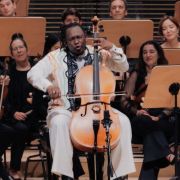
I’ve finally almost gotten used to how good this orchestra sounds in this space. The singing baritone warmth of the cello section, arrayed here stage right behind the first violins so that they project into the house; the extraordinary coloristic versatility of the string section as a whole; the monumental solidity of the brass; the scrumptious lushness of the woodwind choir. But it’s still astonishing how beautifully they balance each other. No pizzicato goes unheard. Even at the brass and timpani’s most exuberant, the strings provide more than just a pantomime of frantic bowing.


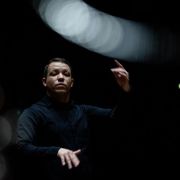
Nézet-Séguin, conducting from memory, put all of this into the service of Bruckner’s sprawling, unhurried epic. The primary impression was that the music breathed. A favorite example from the third movement: just enough time taken before the next entrance for us to hear the harps’ low strings finish their decay.
There is not a lot to quicken the pulse in this symphony; it is architectural, rather than narrative, in construction, and the fastest tempo marking is Allegro moderato, which comes across more as Allegretto. Nézet-Séguin found drama in the contrasts, particularly in the first two movements, and did not allow the frequent phrases built of repeated motives to lose directionality. The final passages of the Scherzo section of the second movement was deliciously ecstatic, and the trio, marked Langsam (slow), was mercifully not too slow, evoking the more genteel cousins of the Scherzo’s dancing trolls.
Both of the final two movements are marked Feierlich (solemnly), and that’s a lot of solemnity to get through. The third movement, I am happy to say, mostly soared and floated rather than plodded, with the recurrent “limping” accompaniment rhythm providing just enough momentum. This movement includes several of what I have to characterize as awkward transitions; Nézet-Séguin made them expressions of human fallibility, rather than trying to gloss them over.


The final movement does have some energetic, propulsive passages, but not many, and they come out of nowhere rather than being built up to. This is where the mind can wander, no matter how gorgeous the music, rather like walking into the fiftieth room in an art museum and thinking, “Oh, look. Paintings.” Nezet-Séguin seemed at times to be attempting to keep the entire hall focused by sheer force of will. And I will have to say that he succeeded. The final, triumphant strains of the piece were like finishing a Saturday crossword puzzle: all that concentration reaping an ultimate reward. “The audience leapt to their feet roaring” is a cliché. This is one of the few times I’ve ever witnessed it happening, quite literally, in real life.