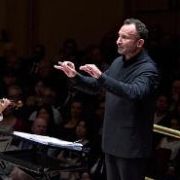
Only recently returned from a European tour led by Gustavo Dudamel, the New York Philharmonic offered their first post-tour subscription concert of the season. On the podium was Venezuelan conductor Rafael Payare, Music and Artistic Director of the Orchestra symphonique de Montréal and San Diego Symphony, leading a program of two Romantic classics: Liszt’s frequently overlooked Second Piano Concerto and Bruckner’s monumental Ninth Symphony.

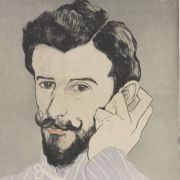
The soloist was French pianist Jean Yves-Thibaudet, whose repertoire has featured Liszt’s music for more than 40 years. The concerto is unusual in that it plays out in one continuous 20-minute movement of six interconnected sections instead of the traditional structure of three (fast-slow-fast) movements and treats the soloist and the orchestra as equal partners, rather than as combatants in a competitive-like dialogue. Demonstrating extraordinary articulation, dexterity and command, Thibaudet delivered a poetic, subtly nuanced rendition, balancing high virtuosity with flexibility of tempo and seamlessly blending the keyboard into the orchestral texture. Payare and the orchestra were splendid, chamber-like partners throughout, as the piano engaged them in an enthusiastic conversation. Among many memorable moments, the opening Adagio sostenuto assai – in which the solo clarinet and accompanying woodwind chorale gently opened the door to the piano’s atmospheric and poetic entry – and the contemplative dialogue between the solo cello and piano in the Allegro moderato section stood out.


After the pianist had taken a couple of bows, Matías Tarnopolsky, President and CEO of the Philharmonic, came on stage to announce that Thibaudet had been awarded the 2026 Avery Fisher Prize, an award given to American classical musicians for extraordinary artistic achievement. Previous awardees of the prestigious prize, awarded every three years since 1975, include Murray Perahia, Yo-Yo Ma, Emanual Ax, Midori and Hilary Hahn.
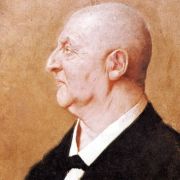
Returning to the stage after intermission, Tarnopolsky announced that the evening’s performance of Bruckner’s Ninth would be dedicated to the Swedish conductor Herbert Blomstedt who had passed away earlier that day at the age of 99. The dedication was especially appropriate as the legendary maestro had a deep, lifelong connection to Bruckner, whom he regarded as “the greatest symphonist since Beethoven”. Payare and the orchestra rose to the occasion with a powerful account of Bruckner’s monumental final work.

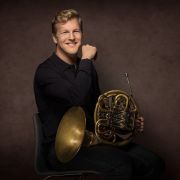
Using the standard three-movement 1951 version edited by Leopold Nowak, Payare, with his highly physical conducting style – making broad, sweeping motions with his arms, sometimes thrusting them upward, rising on tiptoe during the more intense moments – was an exceptionally energetic presence on the podium. A former principal horn for the Simón Bolivar Symphony Orchestra, he seemed to revel in the majestic sounds elicited from the huge brass section called for in the instrumentation – eight horns (four doubling Wagner tubas), three trumpets, three trombones and a tuba.
In the lengthy first movement, labeled “Solemn, mysterious”, he patiently built up the massive crescendos as more ruminative passages sounded by the strings and woodwinds were repeatedly interrupted by blazing brass calls and rolls of the timpani, before discharging a chillingly apocalyptic climax. In the Scherzo, marked “Moving, lively”, the heavy, stomping main rhythmic motif was appropriately sharp and menacing, with the orchestra seamlessly managing the frequent mood shifts between delicate and brutal. In the glorious Adagio (“Very slow, solemn”), where the strings achieved a wonderfully shimmering tone and the thrilling trumpet calls impressed, the abrupt and frequent transitions between fortissimo and pianissimo were smoothly handled until the music faded away into a profound, unresolved spiritual stillness.