A parable about climate change, The Seasons debuted in Philadelphia on a December day where temperatures reached nearly 60°F. Twenty-four hours later, the weather had dropped back below freezing, accompanied by 30 mph wind gusts. Life seemed to be imitating art outside the Kimmel Center, where Opera Philadelphia presented the chamber-sized Vivaldi pasticcio at the intimate Perelman Theater. “Are there really four seasons anymore?” as one character sang. “Or just sudden change?

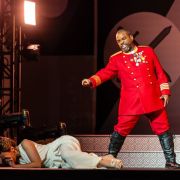
Conceived by the playwright Sarah Ruhl and countertenor-turned-impresario Anthony Roth Costanzo, in collaboration with a pedigreed group of colleagues, The Seasons often feels like The Decameron meets An Inconvenient Truth. The action follows a band of five artists, led by a character called simply The Poet (sung by Costanzo), who take refuge in a rural farmhouse amid worsening deterioration of the atmosphere. They hope their agrestic retreat will stir their waning creativity, but their attempts to generate new work are thwarted time and again by an angry Mother Nature. A character cheekily called The Cosmic Weatherman – sung by the powerful bass John Mburu – frequently breaks into the narrative to chastise humankind’s indifference to the existential threat of global warming.


Director Zack Winokur and scenic designers Mimi Lien and Jack Forman envision the rustic setting as a boundless void at once inviting and disturbing – especially when lit in foreboding, blood-red gels by John Torres. The production’s distinctive scenic elements often function as the primary dramaturgical device, poking fun at the high-handed attitudes of The Poet and the others who’ve joined him in glamping solitude: a Farmer (Abigail Raiford) who previously worked as an actress and hasn’t cut the social-media cord; a Painter (Kangmin Justin Kim) who becomes The Poet’s lover; a Performance Artist (Whitney Morrison) with quixotic ideals; and a Choreographer (Megan Moore) mourning an ultimately death.

The production itself – punctuated by Pam Tanowitz’s lively choreography for a corps of six dancers – demonstrates a level of self-awareness absent in Ruhl’s libretto. Despite the sense of urgency embedded in the work’s creation, the primary characters come across as annoyingly navel-gazing, stereotypical artist types who believe only their art and their special mission of elegant exile can save the world. At times, the activist framing is dropped entirely, and the story becomes instead about budding romances and compounded losses among the group, which all feel like well-trod ground. The physical production at least suggests a level of wit not evidenced by Ruhl’s dour text, as when gigantic floating bubbles personify a devastating storm.
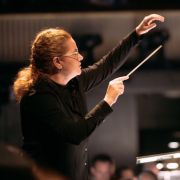
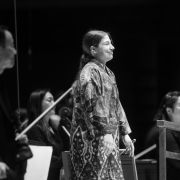
Still, the performance offered sui generis musical pleasures, beginning with the precise guidance from Corrado Rovaris in the pit. Although the reduced orchestra included harpsichord and theorbo, Rovaris didn’t strain for precise HIP rhythms, although his fleet tempos kept the action hurtling even through dramatically static sections. The second-act opening ballet, set to the Allegro non molto from The Four Seasons, was especially thrilling.


Costanzo, in his first on-stage appearance since becoming Opera Philadelphia’s General Director and President last year, acted compellingly and sang with a voice well-knit across its range. If the other soloists were not consistently on his level, they offered their own strong contributions: Moore was especially memorable in her plangent interpretation of “Vedro con mio diletto” from Giustino, giving voice to the Choreographer’s anguish at premature widowhood. Emi Ferguson made a superb on-stage flute soloist, often moving lithely with the dancers as she played.
Addressing an essential issue from a privileged perch, The Seasons cannot help seeming didactic and occasionally tone-deaf. The musical and technical virtues of the piece do their best to overcome this, but the result often feels as flattened as an endless, scorching summer.