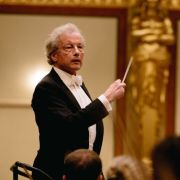
There’s a magical clip online (see below) of Leonard Bernstein conducting the Vienna Philharmonic in the finale of a Joseph Haydn symphony where he does no more than purse his lips and wiggle his eyebrows. Directing the Deutsche Kammerphilharmonie Bremen from the harpsichord, Omer Meir Wellber offered an energetic alternative, nothing less than a full-body workout. He conducted with his shoulders, scything arms and vigorously nodding head, sometimes playing from a standing position and twerking: Jerry Lee Lewis meets Beyoncé.

DKam, as they are colloquially known, arrived at the BBC Proms at the end of a busy tour of European festivals where the other items on tonight’s programme – Bruch’s First Violin Concerto and Schumann’s Fourth Symphony – were regular components. Haydn’s Symphony no. 44 in E minor, “Trauer” (Mourning), was just for London. Playing Haydn with reduced forces can be a gamble in the cavernous Royal Albert Hall, but they filled the space with their Sturm und Drang energy.


Not all entries were clean, but there was a pleasing spring to the strings’ playing that demonstrated their enjoyment. The Minuet was light on its feet, the Adagio – which Haydn wanted played at his funeral (a possible reason for the symphony’s nickname) – flowed affectionately. The Presto finale bristled with agitation. Wellber’s only questionable decision was to suddenly halve the tempo for a six-bar passage marked piano towards the end of the first movement, which felt like a strange, ghostly echo.
At the end of the 20th century, critics tended to be sniffy about Max Bruch’s First Violin Concerto, a reaction to its undeniably popular appeal (it topped Classic FM’s Hall of Fame poll for the first five years, 1996-2000). Happily, Proms Controllers feel differently: this was the concerto’s 14th appearance since that first poll.

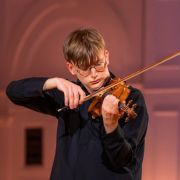
Tonight’s soloist, Daniel Lozakovich, was joining DKam for the only time on the tour (Hilary Hahn had played the Bruch elsewhere) and brought fresh impetus to this evergreen classic. I have previously admired Lozakovich’s tone – warm and sweet, with a generous dollop of vibrato – if not always finding him terribly engaged in performance. This was a different story. From his solo entry, watched intently by Wellber gripping the podium handrail, the Swedish violinist displayed personality aplenty. In the first movement, rubatos and portamentos signalled a mature player happy to respond to the moment and he frequently turned towards the orchestra, participating in the musical dialogue.


The central Adagio was beautifully long-breathed, closing with a daring pianissimo, before the Hungarian-inflected finale burst joyously through the hall. Reluctant to accept the applause – Wellber almost flung him forward for a solo bow – Lozakovich responded with the tender Romance from Henryk Wieniawski’s D minor concerto.

If Haydn is a tough sell in the Albert Hall, so is a Schumann symphony as a concert closer. Hearing DKam play Schumann (the Third) from up in the Circle at their 2000 Proms debut, I strained to actually hear them. In this respect, the revised version of the Fourth, with its thickened orchestration, served the music better in this space. There was rarely any lack of heft here, only the leader’s solo in the Romanze sounding a little pale.
From its misty, brooding opening, Wellber shaped a persuasive, often exhilarating interpretation, zipping through the whole thing in just 27 minutes. He was especially good at navigating tempo changes and transitions so that they felt organic. Dynamic playing and a headlong gallop through the coda – Wellber dramatically splaying his arms wide – left one gasping for breath.