The latest offering of the West Australian Symphony Orchestra comprised a selection of Classical era favourites. It introduced Perth audiences to Italian conductor Riccardo Minasi, the co-founder and original conductor of Baroque group Il Pomo d’Oro, who has since branched out considerably in terms of repertoire. While there was nothing to complain of with respect to its musical delivery, the concert could perhaps have been a little more adventurous in its programming.


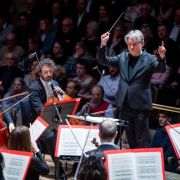
The first item was selections from Mendelssohn’s incidental music for A Midsummer Night’s Dream, Op.21/Op.61, starting with the overture which he composed at the young age of 17, the further movements being added much later in 1842. The WASO program notes usually list its previous performances of specific works, but not in this case; I do remember however one (complete) in 1998 under another Baroque-identified guest conductor, Nicholas McGegan. Minasi’s batonless whole-of-body conducting style is reminiscent of that of McGegan and produced a similarly lively account. Starting with a light touch on the strings (fairies), the full orchestra sprang into action with the braying brass (Bottom), moved on to a calm and reflective nocturne and concluded with a very fast Scherzo which nonetheless did not gloss over the details. Andrew Nicholson’s flute was happily to the fore here.
The second item on the agenda was Haydn’s Trumpet Concerto, Hob VIIe/1 just sneaking into the nineteenth century (composed in 1796, premiered in 1800), with WASO’s Principal Trumpet Jenna Smith. Her performance was just about flawless, with maybe one tiny split high note in the first Allegro. The first movement was well paced, with Smith producing a lovely fluent cadenza, followed by a mellow flowing Andante then an exhilarating virtuosic Allegro. This was rapturously received, with Smith taking three bows, then returning for an encore: a beguiling unaccompanied rendition of Amazing Grace.


After the interval, the major work of the evening was Beethoven’s Symphony no. 3 “Eroica”, Op. 55, initially dedicated to Napoleon, a dedication later repudiated by the composer. Minasi again showed an attention to detail, as well as a good grasp of the overall structure. The first movement, Allegro con brio, was well paced, with nicely delicate string work in the later section. The funeral march was suitably funereal (there seems no way of making this less interminable), while the Scherzo was nice and bouncy, with fine work from the horns. The last movement, a set of variations, produced a good range of pacing and dynamics, coming to a rollicking finale. What looked like a capacity audience expressed its warm appreciation.