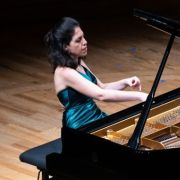
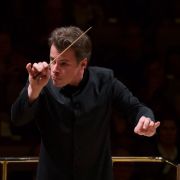
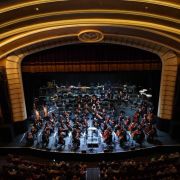
An imaginative programme brought together familiar repertoire with an overdue rediscovery, as Kahchun Wong and The Hallé paired Ravel and Rachmaninov with the Proms debut of pianist Alexandra Dariescu in Nadia Boulanger’s rarely heard Fantaisie variée. The result was a concert that balanced refinement with emotional intensity, while making a persuasive case for Boulanger’s music.

Colin Matthews’ orchestration of Ravel’s La Vallée des cloches from his Miriors, opened the evening with exquisite restraint. Wong shaped this miniature tone poem with great sensitivity, balancing the orchestral textures with delicacy. The placement of the celesta on the flat and the percussion high on the back riser created the illusion of distant bells answering one another across the vast acoustic of the Royal Albert Hall. The music seemed simply to dissolve into the hall’s atmosphere.


Dariescu championed Boulanger’s unjustly neglected work from 1912. Looking both backward and forward, it bridges late Romanticism and Impressionism, providing an inspired link between the Ravel and the Rachmaninov that followed. Its structure recalls Franck’s Symphonic Variations (a Proms favourite of yesteryear): a unison statement of the theme unfolds into a continuous sequence of variations, combining dazzling virtuosity with richly coloured orchestral writing, in a work of around 20 minutes.
At times in the opening half Dariescu was slightly overshadowed by an orchestral swell that became a little overenthusiastic. Nevertheless, her commitment to the score didn’t waver. The opening theme carried a solemnity. One particularly striking passage, where the Rachmaninov-like melody is entrusted to the second violins, provided one of the performance’s highlights. Dariescu accompanied with admirable sensitivity, allowing the orchestral line to sing. Her technical assurance made the formidable piano writing appear effortless, relishing the many contrasting sections, bringing much pianistic colour, conviction and vitality to a work that richly deserves a wider audience. One hopes this will not be the last Proms appearance for either the piece or its outstanding advocate.

Dariescu addressed the audience with much warmth and continued her championship of Boulanger music continued with an encore. Joined by The Hallé’s principal cellist Rachel Helleur-Simcok, she performed the third of the composer’s Three Pieces for Cello and Piano. Judging by the audience’s enthusiastic response to this vivacious miniature, she could easily have played more, but she wisely left them wanting.

After the interval came Rachmaninov’s Symphony no. 2. Conducting from memory, Wong displayed complete command from the opening bars. The first movement was convincingly paced, with the Allegro full of momentum while never sacrificing lyrical breadth. Wong drew finely shaped phrases from the orchestra, balancing the symphony’s warmth with its darker undercurrents. The principal climax felt slightly restrained, but this left ample emotional reserves for what followed.

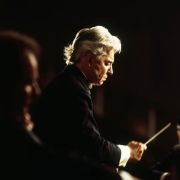
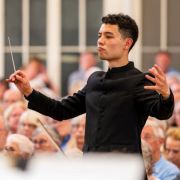
The Scherzo was agile and rhythmically alert, its returning material crisply articulated by the strings and neatly contrasted with the movement’s more lyrical episodes. Wong’s conducting became increasingly economical, his understated gestures recalling conductors whose smallest movements carry the greatest expressive weight. The Adagio was the emotional heart of the performance. Transferring the baton to his left hand, Wong intervened only when necessary, allowing Rachmaninov’s long melodic lines to unfold naturally. The finale crowned the performance with exuberance, yet Wong avoided sheer volume for its own sake. By making the quiet passages genuinely hushed, the climaxes gained all the more impact. It was a performance that demonstrated, throughout, that restraint can be every bit as powerful as excess. Sometimes less is definitely more.