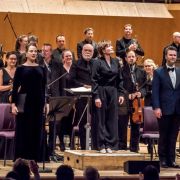
Returning to Manchester’s Bridgewater Hall, the Hallé’s Conductor Emeritus Sir Mark Elder brought an intriguing programme of Russian music inspired by myth, folklore and folk song. This Russian spring showcased not only the strengths of the orchestra and choir, but also the deep musical rapport they share with their longstanding colleague. Each work unfolded with a vivid sense of narrative, binding the evening together from first note to last.

The curtain-raiser was Glinka’s ever-popular overture to Ruslan and Lyudmila. It is very easy to secure rousing applause with this all-too-familiar work, so what made this performance stand apart? Razor-sharp string quavers, the lyrical yet expressive cello melody, articulate woodwind playing and, above all, the way the orchestra breathed as one. It was simply a sheer delight from beginning to end.


Stravinsky’s The Song of the Nightingale followed. This complex tone poem retells Hans Christian Andersen’s beguiling story of the Chinese Emperor and the mechanical bird. The work showcased not only the Hallé’s ability to navigate such intricate music, but also Elder’s interpretative insights, shaping the orchestra to illuminate the score’s textures and timbres, each layer of sound distinct yet perfectly integrated. The storytelling was unmistakable: Elder conducted with intimacy, intelligence and eloquence. The devil was certainly in the detail, with remarkable contributions from Claire Wilkes on flute, Gemma Besson on piano and Paul Janes on celesta.
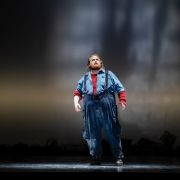
Rachmaninov’s Spring Cantata completed the first half. Dating from 1902 and based on a poem by Nikolay Nekrasov, the work highlighted the Hallé strings with their rich, sonorous playing. The colours here were strikingly different from the Glinka, but no less vivid. Throughout, the bond between orchestra and choir was unmistakable. The choral blend was impressive from the outset, although their diction lacked clarity and the text was often indistinguishable. Soloist Kostas Smoriginas possessed a commanding stage presence to match his bass-baritone voice, bringing vivid characterisation to the text and elevating the work into something approaching a miniature opera. Elder balanced orchestra, choir and soloist with great sensitivity.


The evening concluded with Tchaikovsky’s Symphony no. 2 in C minor which uses many Ukrainian folksongs. The opening Andante sostenuto emerged shrouded in mystery, with flawless horn playing at its centre. Elder gave the larger moments grandeur before allowing them to recede into something more enigmatic. Light and shade defined the second movement, where moods shifted constantly and melodies moved between plaintive lyricism and passionate expression. The Scherzo was articulate, spirited and full of character, its energy spilling into the finale. After the chorale-like opening chords, a surge of momentum propelled the Allegro vivo towards a blazing conclusion, expertly paced by Elder. It was a fitting end to an evening which felt like four vivid musical postcards from Russia, all signed by Elder, with love, to his Manchester audience.