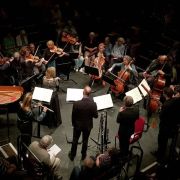
The inaugural concert of the 2026-27 Sheffield International Concert Season, given by the Hallé under its Principal Conductor Kahchun Wong, leaves the rest of the season with a lot to live up to. When the programme for the evening was announced – Liszt’s Les Préludes, Beethoven’s Piano Concerto no. 5 and the 1945 suite from Stravinsky’s The Firebird – it seemed unlikely to set the pulses racing, even with Sir Stephen Hough at the keyboard. But the concert was a triumph for all concerned, suggesting that the Hallé, now entering its third season under Wong’s baton, is in robust health.

It seems odd that the centrepiece of the evening, Hough’s reading of the Emperor Concerto, should be overshadowed by the performances either side of it, but so it proved. Not that it was anything other than excellent. Hough is a pianist of remarkable gifts, his performances consistently unflashy but meticulously pointed and clear. His Beethoven was muscular in the outer movements, tender and humane in the central Adagio. The performers rejected outright the familiar cliché of 19th-century concertos, the idea of the work as a battle between soloist and orchestra. Yes, Hough was assertive in the piano’s initial parade up and down the keyboard, but once Wong and the Hallé picked up the argument in the opening tutti, dialogue and collaboration were the order of the day. The finale was perhaps a little more earth-bound than it might have been, Hough and Wong adopting a tempo that strode, rather than skipped, through the 3/4 time Rondo. But the slow movement was beautiful, a hushed reverie, muted strings providing a backdrop of fragile calm against which piano and winds engaged in intimate conversation.


Liszt’s symphonic poems are often scorned for their over-emphatic bombast, but the Hallé made a compelling case for Les Préludes, and while Wong let the orchestral brass off the leash in its closing pages, before that his secure pacing and meticulous attention to detail made for a far more organic whole than is usually the case. Special mention should go to the strings, particularly the first violins, employing a range of colour and texture to vividly characterise the music’s varying moods, especially in the opening section where they appear to be groping towards the light.

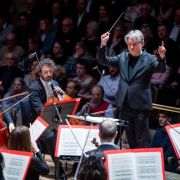
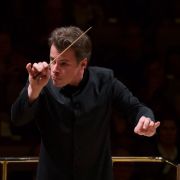
Kahchun Wong is a fascinating conductor – one moment an aircraft marshaller guiding his plane to its terminal gate, the next a fencing master brandishing his foil, occasionally seemingly doing nothing at all – but what was evident here was the absolute commitment the players showed in following his lead. The 1945 suite Stravinsky made from The Firebird includes music omitted from the earlier, shorter suites, and this allowed Wong more opportunity to use his orchestra to tell a story of highly charged, colourful intensity. It’s hard to know what, if anything, to single out in this performance, so utterly compelling was the whole experience. Familiar features – the fluttering violins depicting the Dance of the Firebird as it stretched its wings, the aggressively rasping brass in Kastchei’s Infernal Dance, the sweetly hushed purity of the first horn at the start of the suite’s Final Hymn – all these were in place. But in the end, it was the virtuosity and spectacular unanimity of the orchestra as a whole that roused the audience to cheers at the final chord. Stravinsky’s music is a show-stopper, but it still needs coaxing to take flight. The Hallé and Wong gave it lift-off.