The program for Tonhalle-Orchester Zürich’s appearance at the Dvořák’s Prague festival promised a night of tortured artists: Shostakovich’s Violin Concerto no. 1, hidden away for years under Soviet oppression, and Beethoven’s Seventh Symphony, written when the composer was seriously ill and dealing with encroaching deafness. Instead, conductor Paavo Järvi served up a convincingly understated version of the concerto, letting soloist Josef Špaček carry the emotional weight, and a boisterous reading of the symphony that verged on explosive at times. Fresh and unexpected, it made for an exhilarating evening.

The through thread was a finely calibrated sound that Järvi set from the opening movement of the concerto, which started with a soft glimmer and stayed clear and cool as the volume and intensity rose. A strong internal pulse drove the second movement, which was a short study in working up to a near-fever pitch without going over the top. Dark, subtle backing strokes struck a dire tone for wounded cries from Špaček in the third movement, concluding with a cadenza of uncommon delicacy that set up a fraught finale of tension finally unleashed, as if the music had taken on a life of its own. Järvi picked his spots to hit emotional highs, but for the most part delivered a refined treatment of an anxiety-ridden work.


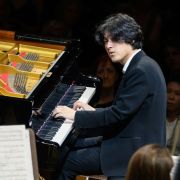
Špaček struck a soulful tone from the opening notes, and throughout showed an expert combination of precision and expression, reeling off blazing lines with polished finesse. In the first two movements he largely matched Järvi’s restraint, but tapped into a deep emotional vein for the third, building to animated anguish for a cadenza that was a technical tour de force. There was no let-up going into the finale, setting the pace for crisp orchestral accompaniment and a spectacular finish. Špaček’s style is a rare blend of natural warmth and keen virtuosity, both of which came to the fore in this performance. A short, sweet encore of Dvořák’s Humoresque in G flat major, put an endearing cap on his appearance.

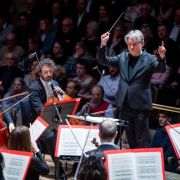
Working without a score, Järvi opened the Beethoven symphony with a bang – literally – and bright colors, both of which remained in the forefront of his interpretation. Both the horns and woodwinds were exceptionally rich, and at times the entire orchestra sounded like a single percussion instrument. A fast-moving tempo was reinforced by playing the piece through, with no more than a heartbeat between movements, leading to a racing finale. The overall effect was to lose some familiar landmarks – the second movement sounded nothing like a funeral dirge, and melodies occasionally got lost in the rush. Giving the music a chance to breathe would have brought it back into more familiar territory. But there is no arguing with Järvi’s absolute command of the material, and if his approach bordered on brash, it produced an exciting performance that garnered an enthusiastic response.


A conductor needs a very skilled, versatile orchestra to accomplish all this, and Järvi has that with his Zürich musicians. They played at a high level and handled the demanding changes in mood, tone and tempo with aplomb. His eight-year tenure (and dozens of recordings) with the orchestra have forged a unique artistic bond in which everyone is proud to say that no two concerts are ever alike. This performance suggested that is no idle boast.