After the opening Sinfonia, two symbolic figures quarrelling loudly (in English) rushed down the aisle to get on stage for this concert performance of L'incoronazione di Poppea. Monteverdi's opera lends itself to such treatment, needing no spectacle but rich in characterisation and personal conflict. Yes, the Gods (Mercury and Athena) would have descended from on high on painted clouds in the 1600s, but the music alone suggests their divine status well enough. And Mercury did at least address us from the very top left of the stalls of Barbican Hall, one of the rare newcomers who did not get lost in this place.

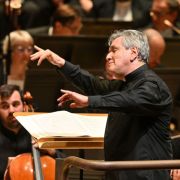
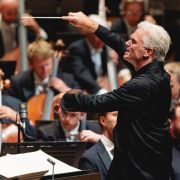
The Academy of Ancient Music under Laurence Cummings is the most reliable guide in such repertoire, and have built a following that ensured a large audience, as attentive as that first, highly educated and cultured audience would have been. At the end there was prolonged applause, with no leaping up and whooping in the modern manner, as if emulating their decorous 17th-century predecessors, making appreciative murmurs to a neighbour, while patting elegantly gloved hands together. The shade of Monteverdi surely smiled down.


If indeed, Monteverdi had much to do with what we heard. Modern research has questioned the degree and nature of his involvement on several grounds, documentary and stylistic, as various details suggest the hands of the next generation, including Monteverdi’s pupils. The AAM’s programme book has none of this, which is fair enough, as we all came to hear “Monteverdi’s Poppea” untroubled by how this marvellous work came to be. But there are likely to be several hands, and Monteverdi might have been engaged in commissioning, curating and compiling as much as composing. In fact my edition of the libretto boldly introduces near the end the “Finale composed by Francesco Sacrati”. But no publicist of the day would hesitate to put the most prestigious name at the top. So “Monteverdi’s Poppea” will continue to serve as shorthand for this brilliant conflation.

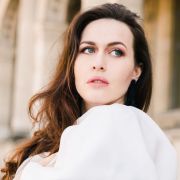
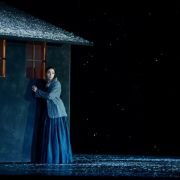
The cast was well practised in the vocal manners required, ensuring the text was audible, as the first hearers expected. The text of any 17th-century opera libretto was the main artistic element, with stage spectacle and fine singing next, but good composing way down the list. Poppea was sung by Anna Dennis, who has sung it often, including on Sir John Eliot Gardiner’s world tour of all three Monteverdi operas. But her familiarity with the role was all benefit, no hint of routine. She is not on stage that much, given her title part, but had the necessary effect whenever she appeared, her tone attractive and the voice fresh. She acted well too, or rather reacted well, depending on the relative status of her interlocutor. Her ‘nurse and confidante’ Arnalta was Stuart Jackson, a tenor of impressive voice, who indicated his profession by wearing an apron over his suit; first white, then green, then red, the only nod to costuming. He was humorous too, especially later when crowing of his new status – “Born a servant, I shall die a lady”.


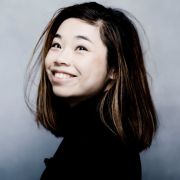
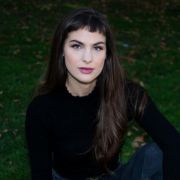
The female team was a strong one; the Ottavia of mezzo-soprano Katie Bray was formidable and, when crossed, her vocal rage (and range) led others to quail before her. But there was never a vocal squall, only a dramatic one, accurately sung even in extremis. She also sang an appropriately pure account of La Virtù in the Prologue. British soprano Maryam Wocial was an enchanting Drusilla, youthful and touching. Scottish soprano Rachel Redmond, now one of our leading Baroque specialists, was Venus, and Amore in the Prologue, singing with familiar charm.

Ottone was countertenor Christopher Lowrey, his piercing tone deployed to mostly good effect. The Seneca of Argentinian bass Nahuel Di Pierro lacked a degree of authority for this role, impairing the poignancy of that character’s plight, although the madrigal-like trio “Non morir, Seneca” was as moving as ever. The cast of almost 20 named parts was consistent. It is difficult to single out individuals from such a group, but tenor Rory Carver sang not only Valletto, but a soldier as well and joined the small chorus, while soprano Danni O’Neill graced the roles of La Fortuna in the Prologue, then of Pallade (Pallas Athena) and Damigella, with affecting tone and line for each.
But the full title of the opera is Nero, or The Coronation of Poppea and the Roman Emperor, has the largest part and drives the plot. No-one seeing and hearing tenor Ed Lyon in the role could doubt this is one of great parts in early Baroque opera. He sang with ringing authority, his duets with Poppea the highlights, and it was some achievement for him to deliver the best singing of the evening even in this line-up.