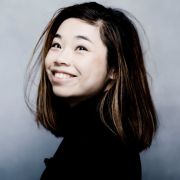
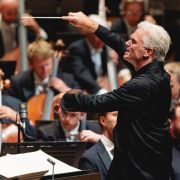
Gustav Mahler’s mighty Resurrection Symphony typically runs between 80 and 90 minutes (84 tonight), and so needs no prelude. But here we heard the UK premiere of Dai Fujikura’s Amber Alchemy, written for the London Symphony Orchestra and its Chief Conductor Sir Antonio Pappano. It was commissioned by Nomura Holdings, whose London office rooftop hosts a beehive, so Fujikara (b. 1977 in Japan) evokes how, as he says, “individual gestures accumulate into something larger than any single bee”. Hence there is “a community of voices (with) busy individual lines”. The result was a teeming, bustling and buzzy work, which put much energy into its ten minutes, the LSO skilled and persuasive advocates as ever.


Mahler’s Symphony no, 2 in C minor, “Resurrection” is a death-to-resurrection piece, its five movement structure bookended by large movements, the first a funeral march and the last a traversal into new life, with three inner movements depicting our sublunary existence, the fourth of which, a short vocal item, depicts the call of faith. It is, stretching the point only a little, a sort of sacred opera, and Pappano, great opera director that he is, stage managed its progress often with dramatic flair.
The imposing first movement began with high intensity, its fierce prefatory gesture for lower strings led by a strong attack from the cellos. Within the dominating funereal tread the music ebbed and flowed, with colourful details. The obsequies permitted the pallbearers to relish the musical wayside flowers at times along the route. Once or twice the conductor allowed them rather too much time to admire the scenery, but always got back to the trudging solemnity of the occasion. The more frenetic passages in this first movement each made its mark with strong attack, but the ever-responsive LSO always accommodated them without exaggeration.

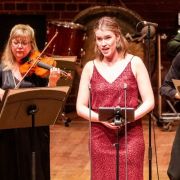
The inner movements provided the contrast intended, the Austrian country dance, or Ländler, of the second movement, marked nicht eilen (don’t rush), given with an insouciant lilt. The third movement is in effect the Scherzo of the work, for which the performance brought out the frequent sarcasm of its musical manners. The fourth movement song, Urlicht (Primal Light) was very well sung by Noa Beinart – a true contralto! The programme booklet shamefully mentions a mezzo-soprano option, but Mahler’s score says contralto and lists no other option. We need an contralto, first because that’s what the composer specified, second because it’s a different sound. Mezzos can usually sing the notes, but not with the same weight and colour, or the degree of contrast with the soprano alongside her (the equally fine Maria Bengtsson). When a soprano and mezzo sing shoulder to shoulder on a platform, who in a large hall can always tell one from the other?


The finale erupts with the wild outburst that ended the third movement. The LSO were thunderous here, but also beguiling when stillness pervaded the music, with distant horn calls and rural murmurings from woodwind and strings. The march section’s offstage bands were ideally balanced, so sounded both present and distant, as Pappano built tension inexorably towards judgement day. The London Symphony Chorus entered, hushed yet weighty and precise with their “Auferstehn, ja auferstehn wirst du” (Rise again, yea, rise again shalt thou). Our fine soprano and contralto soloists reprised and varied ecstatically their Urlicht music. The final apotheosis deploys this large orchestra, large chorus – and organ, which is in the score and listed in the programme, but barely audible as usual. Still, the clamorous coda made its mark with quite enough volume to awaken the dead.