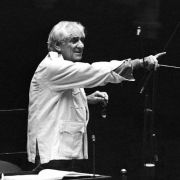
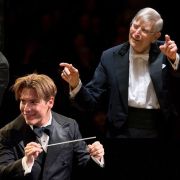
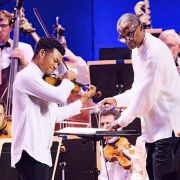
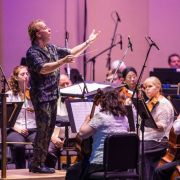
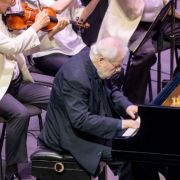
The Philadelphia Orchestra balanced confirmed crowd-pleasers with esoteric fare for the final subscription concert of the 2025-26 season. With all eyes on the city in the lead-up to America’s 250th anniversary, Yannick Nézet-Séguin programmed two divergent works by Curtis-trained Leonard Bernstein alongside George Gershwin, another genre-shifting artist he revered. Taken in total, the bill offered a broad overview of the country’s classical music evolution in the 20th century, even if it didn’t always show the outfit off to their optimal quality.


The Symphonic Dances from Bernstein’s West Side Story, arranged by Sid Ramin and Irwin Kostal, suit the Philadelphians best in its most melodic moments: the shimmering “Somewhere” theme that passes between the strings and woodwinds, the delicate verbalization of first love in “Maria”. The overall performance lacked the snap needed for “Mambo” and the volatile edge that infuses the rumble between the Jets and the Sharks, instead sounding too elegant and homogenized. Nézet-Séguin sometimes sacrificed precise rhythms for indulgent rubato that verged on cloying. Strong individual contributions emerged from Jeffrey Khaner (giving voice to a hopeful future on the flute) and James Vaughen (ratcheting up some much-needed tension on trumpet), but the full suite possessed an unfortunate smudged quality.
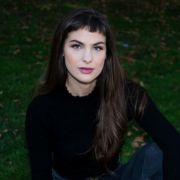
The appropriate sardonic bite was evident, however, in Bernstein’s Symphony no. 1, “Jeremiah”, a work Nézet-Séguin has championed for years. Written in response to World War 2, the opening Prophecy took on renewed resonance in light of contemporary global conflicts. The Philadelphians weren’t afraid to sound macabre here, with brass blaring, woodwinds taking on snarled bitterness and strings cutting rather than soft. The momentary tranquility at the center of Profanation was surrounded by grotesque, distorted rhythms that gave voice to the horrors of man. This laid the ground for a deeply moving Lamentation, with mezzo-soprano Emily D’Angelo singing the Hebrew texts with burnished tone and true feeling. Never a repertory staple, this symphony found a worthy advocate in Nézet-Séguin, who consistently tapped into its full power.


Gershwin’s Piano Concerto in F dominated the concert’s first half. Hélène Grimaud brought hefty volume, ample speed and a wine-dark tone to the solo part, though she often lacked the touch of delicacy needed to balance the virtuosic sections. As such, she was at her best in the insistent first and third movements, soaring easily above the orchestra’s flashy but indistinct accompaniment. Nézet-Séguin brought appropriate refinement and shape to the inner movement, but the total effect felt disjointed.