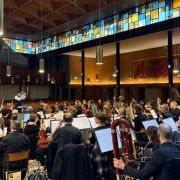
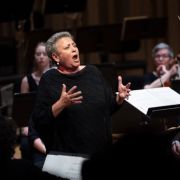
A throng of musicians forms in front of the great wooden doors of the church of Saint-Jean-de-Montmartre. The service is running slightly over time: it was due to finish at 7.30pm. They file in timidly, a few at a time, and wait at the back of the nave, their arms laden with instrument cases and music stands. Then, as soon as the last worshipper has left, there’s a general flurry of activity to clear away the chairs and organise the space. This is a concert with no stage management, no stage plan, no lighting crew, no dressing rooms, no production team: Ut Cinquième is an amateur orchestra. All the musicians are volunteers. Only the conductor, Guillemette Daboval – who must, incidentally, hold the record for the number of chairs moved per minute in her yellow waxed jacket – is a paid professional.

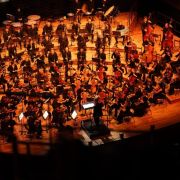
Paris is home to around ten amateur orchestras – and many more if we include chamber ensembles, groups that come together for a single programme or small brass bands. They rehearse in gyms that are freezing cold in winter, in nursery schools or in company canteens. The COGE (Choir and Orchestra of the Grandes Écoles) is the archetype and the inspiration for many others. There is Elektra, which undertakes an ever-growing number of monumental projects and which this year performed Holst’s The Planets at the Philharmonie de Paris. There is Ondes Plurielles, founded in 2017 by a handful of musicians who wanted to play Schoenberg’s Verklärte Nacht and which now boasts more than 120 instrumentalists. In our series of three articles, we set out to explore these orchestras, from rehearsals to concerts, to better understand what drives them and what they can tell us about our collective relationship with music.


Ut Cinquième was founded in the corridors of the École Normale Supérieure, perhaps the most prestigious educational institution in France, to pursue an intellectual and collective ideal in music. Free admission to its concerts is a founding principle that the orchestra has upheld for over thirty years. “Many people say that classical music isn’t for them, that they won’t pay 60, 80 or 100 euros for something they don’t know whether they’ll like. With us, all you have to do is push open the church door and come in,” says Aude, a flautist and rheumatologist at Versailles Hospital who has been one of Ut Cinquième’s mainstays for years. She has served as the orchestra’s general secretary, booking venues and liaising with parishes. Unsurprisingly, amateur orchestras aren’t short of logistical and financial concerns: hiring percussion instruments, finding a rehearsal space, recruiting performers for less common instruments: “finding a flautist or a clarinettist is easy, but finding a contrabassoonist is a challenge!”
When Aude talks about the orchestra, the vocabulary she uses is one of addiction: “Playing in an orchestra is something quite visceral. I can’t do without it; it’s part of my sense of equilibrium.” Olivier, a clarinettist in the same orchestra and director of a perfume brand within a major group, continues: “I come here seeking something that cuts me off from the professional world, something removed from economic performance: a human, artistic project, the pursuit of artistic excellence.”

Philippe, a retired engineer and a member of Ut Cinquième since the very first rehearsal in November 1991 – that’s 34 years of continuous membership – describes the orchestra’s evolution with a touch of nostalgia: “We founded it with a great deal of intellectual idealism regarding our approach to music as a collective activity. We gave few concerts and rehearsed for long periods, and never played concertos so as not to put anyone in the spotlight.” In the early years, the orchestra was closely linked to the ENS, rehearsing on Rue d’Ulm in the school’s premises. “Gradually, we broke away from the school. Our identity changed and the orchestra grew. The standard of amateur music-making has really improved; before, people used to come to listen to their mates, but now there’s a proper audience.” But for him, more than 30 years on, “the pleasure remains undiminished in tackling these works that one never gets the chance to play unless one is a professional. ”


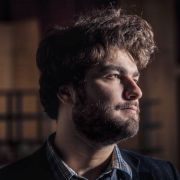
Today, amateur orchestras no longer set themselves any limits when it comes to choosing their repertoire. Tonight’s concert, featuring Janáček’s formidable Sinfonietta and Dvořák’s Eighth Symphony, is proof of this, and all the conductors who work with these orchestras confirm it. Johannes Le Pennec, one of the most sought-after conductors among Parisian amateur orchestras and who will be coming back to conduct Ut Cinquième in June, puts it simply: “The standard has risen dramatically, and they share a common dream of performing crazily challenging works. The problem now lies in the logistics, on top of the complexity of the works. These orchestras are now performing The Rite of Spring, Shostakovich’s Seventh, the symphonies of Bruckner and Mahler.”

I turn to the musicians to see what they have to say about this boundless ambition. I ask a trumpeter with Ut Cinquième, a hydrologist responsible for flood forecasting: “You’re not afraid of anything, are you?” He replies with a laugh: “Oh yes, tonight it’s too hard – you’ll be able to hear it.”
It has to be said that the church acoustics don’t help. The sound echoes around the nave, and the layers of sound in the Janáček become muddled. “That’s the downside of amateur orchestras,” laments Johannes Le Pennec. “They do an incredible job, but it can be ruined by the acoustics on the day. I’ve played in venues where the acoustics meant that 60 per cent of the work we’d put in couldn’t be reproduced. It’s a real frustration.”
At Saint-Jean-de-Montmartre, Ut Cinquième thus highlights the paradox of amateur orchestras: often precarious conditions, yet a musical ambition that is anything but modest. Next week, in the second article in our series, this ambition will take on a whole new dimension, with Elektra at the Philharmonie de Paris.
Translated from French by David Karlin