
Four years after the Metropolitan Opera’s first-ever staging of Luigi Cherubini's Medea, the company has brought back Sir David McVicar’s visually explosive, mirror-laden production of the Italian-born composer's rarely performed take on Euripides’ ancient Greek tragedy. Premiered in French in 1797 as Médée, its forward-looking score bridges Classical restraint and Romantic passion. Blending elegant strength with raw dramatic power, the masterful work chronicles the vengeance of the sorceress Medea, who – after enabling Giasone (Jason), leader of the Argonauts, to retrieve the fabled Golden Fleece, and then being betrayed by him – poisons her rival, Glauce, and slaughters her own children.

For this first revival Bulgarian soprano Sonya Yoncheva assumes the role, taking over from Sondra Radvanovsky, who delivered a tour-de-force portrayal of the scorned sorceress in the premiere run. Yoncheva is no stranger to the challenging part, having previously starred in the original French version at the Staatsoper Berlin in 2018. Now, for the first time in her career, she’s singing it in Carlo Zangarini’s 1909 Italian translation. Requiring a massive vocal range and intense, emotionally exhausting acting, the role became a signature vehicle for Maria Callas when she debuted it at the Maggio Musicale Fiorentino in 1953. Her success in that production resurrected the opera from relative obscurity and established her portrayal as one of the legendary soprano’s most acclaimed achievements.

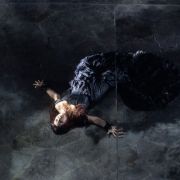
On this opening night of the current run, Yoncheva claimed the role for herself. As soon as she made her entrance, garbed in a bedraggled black gown, her hair wildly disheveled, her eyes ringed in black, she dominated the stage with her immense vocal power and extraordinary dramatic presence, and went on to create a defining performance. Demonstrating tremendous stamina and range, she seamlessly navigated the demanding shifts between crisp, Classically-controlled moments and fiery, proto-Romantic outbursts, to create a convincing, highly nuanced depiction of psychological breakdown as she transitioned from a pitiful, abandoned wife to an insane, infanticidal sorceress.

Yoncheva was tremendously moving in “Dei tuoi figli la madre”, the monumental Act 1 aria, in which, while reminding her faithless husband of the sacrifices she has made for him, she alternated between the harsh piercing death threats of a scorned queen and the soft, legato-laced pleas of a mother begging for the return of her family. Nearly all of Act 3 belonged to her character, beginning with the storm-like orchestral introduction where the soprano effectively conveyed her character’s ongoing descent into madness via a wordless sequence of animalistic dance movements around the stage. Her most impressive vocal moment was the furious final scene in which she unleashed her sorceress powers in a series of punishing exclamations ranging from her bottom register up to soaring high B and Cs.

The prima donna was surrounded by a mostly strong cast. American tenor Michael Spyres’ depiction of Giasone was disappointing, his portrayal coming across as dramatically flat and overly detached. As Glauce, the ill-fated Princess of Corinth, Cuban American soprano Elena Villalón displayed a bright and agile lyric coloratura sound in her light-hearted Act 1 aria “O Amore, vieni a me”. The Greek bass Alexandros Stavrakakis maintained a stalwart vocal presence as Creonte, Glauce’s father. In an impressive Met debut, Russian mezzo-soprano Victoria Karkachev portrayed Neris, Medea’s loyal companion and confidante, singing her Act 2 aria, in which she consoles a devasted Medea, with familial warmth.

Following a fiery and intense Overture, the Met Orchestra – under the baton of Carlo Rizzi – elicited a vigorous account of Cherubini's psychologically complex score, balancing its stormy drama with moments of tender lyricism. The magnificent Met Chorus, representing a cross-section of Corinthian society, sang throughout with clarity and precision as they reacted with horror to the escalating vengeance.