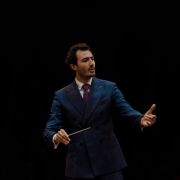
Midsummer’s Eve is an enchanted liminal time where the sun reaches its zenith and, according to legend, the veil between the physical and supernatural worlds grows thin. In Scandinavia they light bonfires to keep the spirits at bay, but as the evening solstice sun crept around the lovely Holy Trinity Church in St Andrews, the programme from the Scottish Chamber Orchestra Chorus lightly tapped on the door of the mystical and divine. With no specific links between the works in the programme, conductor Gregory Batsleer nevertheless promised us a spiritual feast of absolute gems.

Philip Glass was commissioned to write his Three Songs for Chorus a cappella by the Québec 1534-1984 Festival, setting words by Canadians Leonard Cohen and Raymond Lévesque, with Mexican writer and Nobel Laureate, Octavio Paz. The three songs flowed on from each other, building a momentum. Cohen’s There are some men was gently melancholic with deeply lush harmonies and soft open fifths, Batsleer balancing his singers as Glass’ repetitive notes and trademark harmonies provided a framework for the lyrics. I was reminded of Laurie Anderson’s looping 1982 hit O Superman; indeed, Glass set one of her songs subsequently. Quand les hommes vivront d’amour had a lively bounce, the background beat now with a jazzier edge, Batsleer focusing the choir for Paz’s more profound Pierre de Soleil, the ancient Aztec calendar asking us existential questions about life.


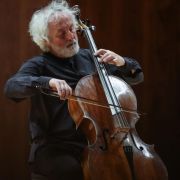
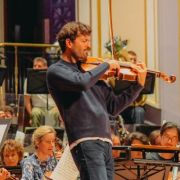
If Glass is not known for writing for chorus, then John Tavener’s works for solo instruments are also rare. Like The Protecting Veil, Thrinos was written for cellist Steven Isserlis, Tavener exploring the spiritual possibilities of the instrument. A short but profound lament touching on Orthodox chant, cellist Philip Higham gave a touching and sensitive performance, solemn double-stops and considered transitions drawing the audience into a wondrous midsummer meditative silence.
Out of that silence, Sir James MacMillan’s wonderful Miserere emerged, the double choir setting providing richness and intensity to this deeply spiritual work, a prayer for forgiveness from Psalm 51. MacMillan’s choral writing is indeed inspired, the chorus building layers of sound over suspended chords, Batsleer balancing the sound as if on a whetted edge. There are references to Allegri’s famous setting, but MacMillan makes this his own, the work building to a couple of electrifying climaxes, Batsleer’s arms stretched out wide, sopranos soaring to the roof. With perfectly blended solos from a singer in each section, the work ended more reflectively with a slight Scottish lilt in the final bars.
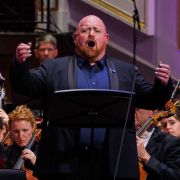
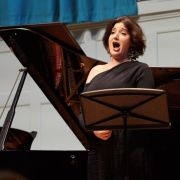
To finish, Duruflé’s Requiem in a version for organ, cello and choir with baritone and mezzo-soprano soloists. Organist composers love to feature their instrument and Michael Bawtree’s thoughtful, colourful registrations were a feature throughout, celebrating the composer’s personality. The work is based on an ancient Gregorian plainchant foundation, gently rippling in a flowing lyrical Introit. Batsleer brought out detail from the singers with disciplined dynamic changes and kept the pace up in the Kyrie building to its energetic climax. Paul Grant’s baritone brought muscular gravitas to the central Domine Jesu Christe section, Bethany Horak-Hallett’s smooth mezzo an operatic touch in the Pie Jesu, Philip Higham’s expressive cello a comforting cushion. Although it’s a gentle meditative work, there were fabulous high points, the choir an astonishing wall of sound facing the Day of Judgement. The concluding In Paradisum was luminously reflective, the final unresolved chord suggesting endless tranquillity in a contemplative finish to a midsummer evening, the last of the sun casting long shadows as we left the church.