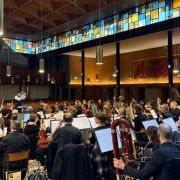
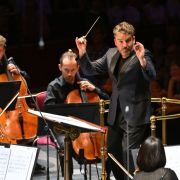
There was much to admire in Anja Bihlmaier’s programme with the BBC Philharmonic Orchestra, from the concentrated intensity of Lili Boulanger’s Psalm 24 to a sincere and finely detailed account of Brahms’ German Requiem. The Audi Jugendchorakademie brought a cohesive sound to both works, with particularly impressive diction in Brahms, while Bihlmaier elicited committed and responsive playing from the orchestra. There were moments of considerable impact, although a handful of shortcomings prevented the performance from achieving its full potential.

Boulanger’s Psalm 24 is a bold work, packing considerable force into just five minutes, something Bihlmaier clearly recognised. Across its three contrasting sections, the orchestra responded with impressive weight and precision. The chorus produced a beautifully unified sound, although their French lacked a little polish. The uncredited tenor solo in the central section was submerged and lacked some security and projection.


A German Requiem is a formidable undertaking for any choir, demanding both considerable stamina and technical control. Although the polyphonic writing is relatively restrained, some of the vocal writing sits high in the tessitura and there were occasional signs of strain. The Audi Jugendchorakademie were nevertheless more at ease with the German, its familiarity immediately apparent. From the opening words, the choir offered a beautifully blended tone and impressively clean diction.
Bihlmaier captured the solemnity of Selig sind, die da Leid tragen with restraint and grace. Her pacing had purpose, while phrases were allowed to swell naturally. The sopranos were particularly impressive, combining secure diction with warmth of colour. Denn alles Fleisch, es ist wie Gras brought a marked intensification of tone. Bihlmaier drew considerable weight from orchestra and choir, and the unison singing was exceptionally well balanced. She resisted the temptation to peak too early, reserving weight for the movement’s climax, which arrived with conviction and considerable dramatic force.
Baritone Joshua Hopkins matched the choir’s clarity in Herr, lehre doch mich, delivering a strongly projected and dramatically focused line. At the height of the movement, however, the density of the orchestral and choral textures occasionally obscured him. The sustained pedal-note passage retained a strong sense of momentum, and the arrival of the plagal cadence was particularly well judged.

The familiar Wie lieblich sind deine Wohnungen was beautifully sung but lacked enough momentum to animate Brahms’ lilting dotted rhythms. It was less successful in execution than the preceding movements, despite the choir’s considerable vocal refinement. Ihr habt nun Traurigkeit similarly lacked some of the purity and poignancy required. Julie Grüter, the soprano soloist, employed rather more vibrato than the surrounding choral sound could comfortably accommodate, while her projection occasionally disturbed the delicate balance Bihlmaier had established.


By the sixth movement, there were signs of fatigue, particularly among the tenors, whose intonation at the top of the register became less secure. The sopranos and altos maintained their lines impressively, although diction began to falter. Bihlmaier handled the fugue with considerable care, maintaining clarity between the individual lines and achieving a finely judged balance. The pacing towards the conclusion lacked some impetus, diminishing the dramatic impact of the final bars.
Selig sind die Toten brought the performance to a beautiful and reverent close. The sopranos were particularly fine, although some insecurity in the tenors’ upper register occasionally blemished the quality of the singing overall. Even so, this was a thoughtful and musically sincere performance, notable for its beauty of sound, balance and respect for the score.