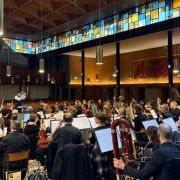
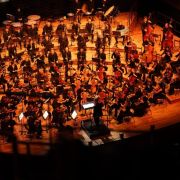
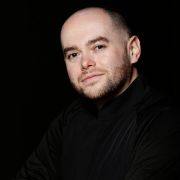
New Year’s concerts are seldom devoted to early music. Rarer still are those that resist offering a miscellaneous ‘greatest hits’ anthology. This Berlin programme, presented by the Akademie für Alte Musik Berlin and the RIAS Kammerchor Berlin under Justin Doyle, embraced spectacle with purpose – much as St Mark’s Basilica once did. As numerous travel diaries from the 16th and 17th centuries attest, the basilica, no ordinary church but the private chapel of the Doge, dazzled visitors from across Europe and even the Ottoman realms with its sumptuous polychoral writing and brilliant instrumental display.

The quasi-liturgical decision to present Cavalli’s Mass in its constituent movements, interwoven with contemporary works by Gabrieli, Monteverdi and Bassano, is in itself nothing unusual. The real challenge lies in sustaining dramatic tension and auditory freshness when polychoral brilliance unfolds over nearly two hours. Familiar pitfalls, where grandeur and antiphonal effects harden into stereotype and predictable gesture, were avoided through an effortless refinement of articulation and instrumental embellishment that felt idiomatic yet never formulaic. Crucially, the spatial dimension was recalibrated with acute sensitivity to the Philharmonie’s modern acoustic.


Here, Cavalli’s Messa concertata functioned as both structural scaffolding and expressive core. His dramatic instinct, shaped by a lifetime in the theatre, translated directly into sound. Cornetts, bright and agile, cut cleanly through the choral fabric, while the posaune grounded the texture with weight and gravity. In the Berlin Philharmonie’s exceptionally clear acoustic, these forces combined to striking effect. Polychoral groups answered one another across the hall with crisp definition, while within each choir and instrumental ensemble, phrases were exchanged, echoed and reshaped in tightly focused dialogue. The result was a soundscape of remarkable depth and luminosity, most tellingly in the firmly projected Credo and the glowing Sanctus–Benedictus. The music conjured an almost hallucinatory spatial illusion, an intoxicating impression of standing inside the gold-laden mosaic interior of St Mark’s itself, where sound and architecture dissolve into a single, shimmering experience.
Among the shorter, connective works of the programme, Giovanni Gabrieli’s Hodie Christus natus est proved especially memorable: darkly glowing sonorities were interwoven with an underlying dance-like propulsion, creating a beguiling tension between solemnity and movement. Equally capable of radiant fullness and translucent softness, the choir brought particular finesse to Monteverdi’s Cantate Domino, whose brevity and transparent textures emerged with crystalline lightness.
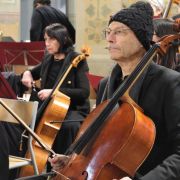
Instrumental interludes by Cavalli, Marini and Bassano provided moments of contrast and grounding, articulating the programme’s internal breathing spaces. Marini’s Passacaglia à 4 stood out for its restrained inwardness, its gently unfolding variations sustained by low, lament-like lines drawn from the bowed strings, offering a moment of hushed concentration amid the surrounding brilliance. Concertmaster Georg Kallweit engaged in a remarkably intimate dialogue with several leading violins, their lines echoing, shadowing and subtly answering one another. No less effective were the brief Giovanni Gabrieli intonazioni for chest organ which, in their clarity and poise, functioned as quietly eloquent thresholds between larger-scale works.


The devout encore, Cavalli’s Salve Regina, felt like a natural extension rather than an afterthought: a gesture of serene closure that allowed the accumulated splendour to dissolve into calm reflection.
By bringing a coherent vision of Venetian sacred music to a New Year’s celebration, the “Serenissima” revealed a tradition far removed from austere Roman liturgy. Doyle and his performers achieved something unmistakably heartfelt: at moments, even the organist apparently mouthed the choral lines, fully immersed in the collective music-making. These works, once intended to project Venetian glory, were here offered as a generous midwinter blessing, conveyed with warmth and sincerity. The Akademie für Alte Musik Berlin and the RIAS Kammerchor Berlin deserve heartfelt thanks.