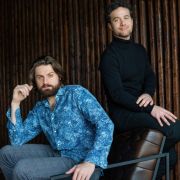
Should we boycott Wagner because he was antisemitic? Cancel Picasso because of his abuse of women? Can one truly separate art from the artist? Director Bill Barclay argues that you can… but then uses the music of Carlo Gesualdo as the soundtrack to a theatrical biography of the murderous Renaissance composer. Co-commissioned by St Martin-in-the-Fields, Death of Gesualdo knits together the man and his music, which Barclay describes as “the aural diary of a degenerate”. Performed by the eponymous ensemble The Gesualdo Six plus half a dozen actors, it made for a striking experience.

Gesualdo’s backstory is eye-poppingly lurid. The great nephew of Pope Pius IV, he was born into a noble family. In 1590, assisted by three henchmen, he murdered his wife, Maria D’Avolos, and her lover, Don Fabrizio Carafa, the Duke of Andria, when he caught them in flagrante delicto. An honour killing was perfectly legal for an Italian prince at the time, so Gesualdo faced no criminal charges. Indeed, the mutilated corpses were kept on public display on the steps of his palazzo. A second marriage was not much happier. His new wife, Eleonora d’Este, had Carlo’s concubines, Aurelia and Polisandra, tortured and put on trial for witchcraft. Gesualdo was afflicted by psychosis, his torment culminating in wild bouts of flagellation. Up to 20 servants would be instructed to beat him. He probably died from the infected wounds.


It’s arguable that without this lurid backstory, Gesualdo’s music would have fallen into obscurity. It’s also arguable that his music was born out of the self-pitying torment he suffered. His last two books of madrigals in particular ache with pain and sadness. Are they confessional? Densely chromatic and expressionist, they break the rules on a scale unheard of again until Wagner nearly 400 years later. A selection of the madrigals, woven with excerpts from the Tenebrae Responsoria of 1611 and a single madrigal by Monteverdi, formed the soundtrack for Barclay’s production, described as a “theatrical concert”.
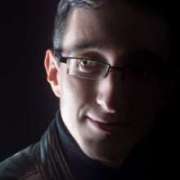
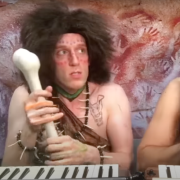
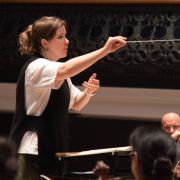
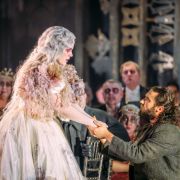
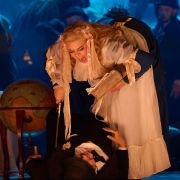
The three-foot high stage was shared by the twelve participants, the actors gorgeously costumed by Arthur Oliver. The Gesualdo Six, plainly dressed with soft ruffs, had their eyes blackened, as if they had been gouged out. They framed the action, but also illuminated it – literally – with hand-held lights. Barclay and choreographer Will Tuckett occasionally froze the mimed, stylised action, creating a series of tableaux vivants lit as exquisitely as Caravaggio's paintings. I’m not sure we needed the additional illumination of mobile phones accessing the online texts and translations but most people gave up and absorbed themselves in the stage action.

A puppet, skilfully manipulated, represented the child Gesualdo, but for most of the evening – 80 minutes, no interval – Markus Weinfurter embodied the composer, with other five actors taking on various roles from cardinal to strumpet. White sheeting was used to conceal the semi-naked sex scene, red sheets used for their spilt blood.


Barclay made sure that the music was never peripheral. The Gesualdo Six sang with their customary relish, biting into the crunchy dissonances, one of which was perfectly well timed when Gesualdo struck a blow to send his second wife to the floor. Moro, lasso, al mio duolo – Gesualdo’s masterpiece, with its double-meaning on “morte” standing for death and sexual release – was superb in the execution of its daring harmonic progressions. The agony and the ecstasy were both palpable in this haunting Renaissance chronicle.