In a more than Odyssean journey, Sir David McVicar’s classic Glyndebourne production of Handel’s Giulio Cesare has finally landed on the shores of the Deutsche Oper Berlin after 20 years of meanderings. Indeed, the unpredictable summer weather and a keen audience lending their ears to a tale of love and war constituted a textbook Homeric setting. Supported by a reliable performance from conductor Alessandro Quarta and a strong cast led by Christophe Dumaux’s Cesare and Elena Tsallagova’s Cleopatra, this McVicar à l’allemande provided a nice close to the season.

Much has been said about McVicar’s faux Baroque staging, in mostly enthusiastic terms. The colonnade framing the stage, creating a sharp central perspective toward the ever-rolling sea in the background, appeals even to the sternest traditionalists and at the same time undermines said tradition, turning it into parody. The lighting design (Paule Constable) is in clear contradiction with any historical practice, relying as it often does on strong directed lights which would have been impossible without electric lighting. This is consistent with McVicar’s intentional grouping of historically incongruent elements, including the transposition of the plot to the British rule of Egypt at the turn of the 20th century.


Ultimately, the production finds its best features in its immediate beauty, comedic self-awareness and unhurried pace. At least in public occasions, both Romans and Egyptians are presented as caricatures of themselves, suggesting that the political frame is little more than a farce concealing the characters’ own interests. Still, McVicar preserves a balance between gags and quiet, even empty moments, much needed in a four-hour-long opera. The only blind spot in the Deutsche Oper’s revival was the – unintentional – implications of casting Michael Sumuel, the only Black member of the cast, as Achilla, who is shown dragging Cornelia on stage and forcing himself onto her. Without distorting or diluting the character’s violent intentions, one wonders if it would have been possible to make the scene a little less charged. In any other regard, the German production proceeded smoothly and left the audience amused.

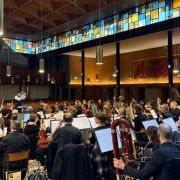
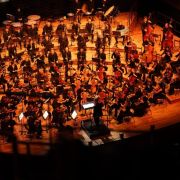
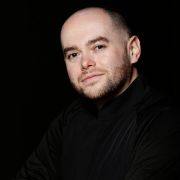
Quarta’s debut at the Deutsche Oper was somewhat of a curiosity for the opera house, whose reputation is tied to a more Romantic, more Teutonic type of repertoire. Perhaps because of this, Quarta maintained a cautious approach, eschewing extravagance in dynamics and articulation. In a way, this simplicity helped singers and solo instruments shine through, like the ‘duets’ between Sesto and the cello in "Cara speme" or Cesare and the violin in "Se in fiorito ameno prato", or the numerous touches of colour from the woodwinds and horn. Tempi were also kept reasonable, never venturing into the two extremes of the metronome. If not always thrilling, Quarta’s aurea mediocritas served well in the recitatives, where the basso continuo gave Handel’s harmonies a clear, pliable contour.
Featuring half a dozen characters with at least three arias each, Giulio Cesare is a dream for singers and coloratura lovers, and a likely headache for casting directors. In the Deutsche Oper’s case, however, efforts paid off.


Dumaux quickly warmed up his countertenor into an agile, sensitive instrument. Already in "Va tacito e nascosto", the singer gave proof of his strongest suits: solid breath control supporting beautiful legati, firm intonation, and a certain softness which complemented the horn obbligato. By the time Dumaux reached "Se in fiorito prato ameno" and "Al lampo dell’armi", there was no doubt about his coloratura, steady across registers and tempi and virtually inexhaustible.
Tsallagova’s Cleopatra was a worthy match, both musically and in stage presence. She seemed unbothered by all the dancing and leaping around required of her, setting the tone with "Non disperar chi sa?" and remaining consistent until the end. Vocal somersaults, fast runs and a well-projected, round soprano made for an extroverted, confident performance. In "Piangerò la sorte mia", Tsallagova convincingly turned inward, giving volume to the more introspective aria.

Having mostly seen Stephanie Wake-Edwards in the Deutsche Oper’s recent production of Zar und Zimmermann, listening to her sing was finally a pleasure. Her Cornelia relied on Wake-Edwards' incredibly resonant low register, as if to drag the audience down into the character’s grief. Together with Martina Baroni’s beautifully sung Sesto, the two were responsible for many of the evening’s highlights – and I look forward to hearing Baroni in more of this repertoire.
As Achilla, Michael Sumuel left a very positive impression thanks to a nimble yet ample bass. Cameron Shahbazi completed the sextet with a physically athletic but occasionally dry Tolomeo, whose abrasiveness nonetheless fit the character’s nature.