Unintentionally, the return of Damiano Michieletto’s production of Carmen, with its black-clad elderly lady haunting the stage waving her fateful cards, is ideally timed for Halloween. Indeed, there is something of the supernatural to Carmen which can be lost in all the heat and bodily fluids of this earthiest of operas – cursed destiny and the haunting of the past. The Michieletto production is now well ensconced at Covent Garden, and under revival director Dan Dooner it feels practised without being stale. Certain irritants remain – in particular the use of children between acts to signpost the time jumps. It’s cutesy but tonally jarring and prompts unwanted applause, which destroys the delicate beauty of the intermezzo.


The revival sees Ginger Costa-Jackson take on the revival role, giving us an original and dynamic take on the character. Where previous interpretations emphasise the character’s sexuality, Costa-Jackson plays more on the character’s countercultural behaviour, bringing out a rebellious, almost terrorist air. The sensuality is still there – her Carmen is still a creature of appetite – but her greatest pleasure seems to be in flouting the laws, mores and expectations. Pitting this figure of anarchy against Russell Thomas’ blocky, tightly wound Don José gives that clash between joyous chaos and miserable order, but also emphasises the yawning gulf that attempting to bridge will prove disastrous. Duty, in the form of Adriana González’s absurdly dowdy Micaëla – thick glasses and awkward movement – is safely unappealing, while a devil-may-care sinuous Carmen is too tempting.

Costa-Jackson has form both with the French repertoire and the role itself, and it shows. Her “L'amour est un oiseau rebelle” was fragrant, passionate and yet deeply poetic; a profoundly expressed manifesto rather than a superficial influencer quote. Her registers are integrated and powerful across the board, with an umbrous top voice that packs a major punch. A sense of line and expressive articulation was presented throughout. The only thing lacking was perhaps an absence of general chemistry with Thomas’ José: one never felt much in the way of attraction, let alone love.


Thomas has forceful tenor with ringing top notes; there’s no strain in the voice, but he had a tendency to lose power at the bottom. Diction was firm, and in the finale of Act 3 he depicted with flair the final descent from restraint to wild fury: eyes blazing, nostrils flaring, body clenching, it was a viscerally physical performance.

González couldn’t make a huge amount of Micaëla theatrically, but she brought a bright soprano to the role, with a clean higher register. Alexander Vinogradov’s Escamillo was well sung but lacked a certain swagger that the crowd-pleasing toreador should command. Barnaby Rea’s bass was suitably rugged for Zuniga, while Seohyun Go and Ellen Pearson brought plenty of energy to Frasquita and Mercédès respectively.

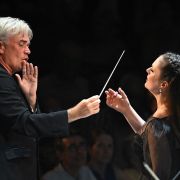
In the pit, Sesto Quatrini took the house band at a brisk pace, with an energetic lift-off that set the tone for a zinging performance. Brass quality wavered on occasion, but the woodwind was particularly fine. Quatrini was careful to avoid any conflict between pit and stage; his forces never overwhelmed the singers, and it was a finely judged performance. An excellent revival.