When you think of Elgar which of his works comes first to mind? The Cello Concerto, First Symphony, Enigma Variations, Pomp and Circumstances Marches? All fine works which represent his range of gifts. But the work of which, quoting Ruskin, he said “This is the best of me… this, if anything of mine, is worth your memory” is The Dream of Gerontius. Written, he told one friend, “from my insidest inside” and to another he confided “I have written my heart’s blood into the score.” In the great series of large-scale English pieces for choir, soloists and orchestra, its stature places it with Handel’s Messiah and Britten’s War Requiem. A spiritual work like the former, it tells of individual human struggle like the latter.


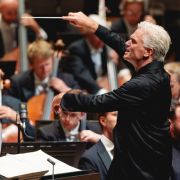
The London Symphony Orchestra and London Symphony Chorus probably know the work better than any. The LSO was conducted by Elgar from their founding in 1904, while the LSC, 60 years old this year, has sung the work 26 times and made four recordings of it. Chorus Director Mariana Rosas will have been glad of the choir’s experience with a work she was preparing for the first time. They are required to sing as angels and as demons at different points in the score, which has extra complexities stemming from the composer’s frequent use of smaller groups within the full choir. These semi-chorus passages were sensitively sung, and well-balanced by Chief Conductor Sir Antonio Pappano. In the big full choir climaxes the nearly 150 voices, completely filling the Barbican choir stalls, were as rattling thunder.

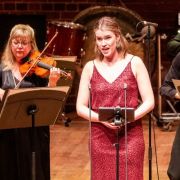
But much of the score uses soloists, and we were blessed by a trinity of excellent ones. Young British bass William Thomas was an impressively firm-toned Priest and, in Part 2, the Angel of the Agony. His opening “Profiscere anima Christiana, de hoc mundo!” (Go from this world, Christian soul) was as resonant a deathbed send-off as any of us could wish for. As the Angel herself, the (ideally-named) Emily D’Angelo, in her LSO debut, sang quite beautifully, her lovely mezzo-soprano an ideal instrument for the role, with a focused chest register and confident top notes, true in intonation. If it is not yet the largest voice, this mattered little given the experience of Pappano in managing orchestral volume so that she was never covered by the players. Her closing farewell “Softly and gently”, the score’s richest plum, was an ineffable envoi to that “dearly ransomed soul”.


David Butt Philip must be as fine a British tenor as we can invite to sing Gerontius at present. Elgar wanted an operatic voice, or at least said the part offered “a good healthy, full-blooded romantic, remembered worldliness”. (Boult even tried to get Luciano Pavarotti for his recording of the oratorio!) Butt Philip had the vocal heft when needed, with ringing high notes and a hint of italianità. But he is a man dying, and made touching use of a hollowed-out tone when the text depicts Gerontius in extremis. In sum, an engrossing and moving Dream of Gerontius, a passionate pilgrimage of a soul from this world to the next, owing as much to Newman’s wonderful text as to Elgar’s incomparable setting, and very warmly acclaimed by a full house.