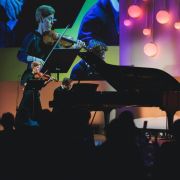
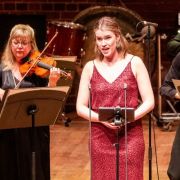
Lisa Batiashvili premiered Magnus Lindberg’s First Violin Concerto back in 2006. The following year she released the first recording, conducted by the composer’s friend and fellow Finn, Sakari Oramo. Twenty years on, soloist and conductor seem still to identify closely with it, to judge by this highly committed re-encounter. Its three untitled movements play continuously, and it feels on this (for me) first live acquaintance almost as much like a one movement work with three – or more – distinct sections, so buttonholing was its uninterrupted 25 minute span. The accompaniment came from a chamber version of the BBC Symphony Orchestra, strings (just enough to be effective when divided), and two each of oboes, bassoons and horns.


The work opens with a very high and soft solo over quiet orchestral strings, like a distant summons from above, a beguiling reverie. Soon livelier dance figures come in, and the invention rarely lets up thereafter. Harmonies seductive and rebarbative succeed each other, musical gestures shared between soloist and orchestral players. The pair of horns is especially prominent, whether poetically evoking woodland pastoral or calling heroically to action. The soloist rarely gets a pause, so the 25-minute span is demanding enough. Lisa Batiashvili was equal to all the work’s demands right up to a show-stopping cadenza of coruscating brilliance. The composer came on stage at the end to show his appreciation of such fine executants of his work.
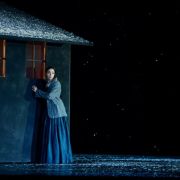
Stravinsky’s Perséphone is rightly called a melodrama on the score, for it features recitation over music, but the composer also said it was “a masque, or dance pantomime”. So a hybrid stage work with dancers and mime, the title role spoken, with a choir and a tenor soloist costumed but static. There are three parts, all sung or spoken in the poetic French text of André Gide. The composer dismissed the text as “vers caramel”, and the phrase “la brise vagabonde a caressé les fleurs” was the sort of thing he had in mind. The restless breeze does indeed caress the flowers three times early on, after the opening invocation to Demeter by Eumolpus. That solo makes a radiant curtain-raiser, but our Eumolpus, American tenor Peter Tantsits, was not quite up to it, sounding stretched and dry-voiced. He lists Eumolpus, which is a near heroic tenor part, among the parts he sings, and found a bit more vocal resource later on, without quite persuading us he owned the role.


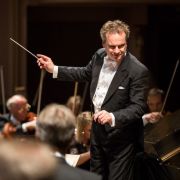
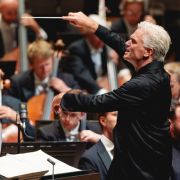
The BBC Symphony Chorus, especially the women, were considerable compensation, singing their several beautiful passages with accuracy and good tone. They were clearly well prepared by Chorus Master Neil Ferris, for this music, for all its seraphic sounds, is not without its tricky corners (well, it is Stravinsky). Our narrator was British-French actress Amira Casar, who recited her role with persuasive diction and phrasing, as ‘musical’ as she could be without actually singing. Stagings of Perséphone are rare, and although Stravinsky was a great man of the theatre, many of his stage works now have to be heard mainly in concert halls. Nonetheless, Oramo brought plenty of theatrical drama to the work, with strong attack at crucial moments, never letting the performance raise any suspicion of concert routine. The BBC players were impressively responsive, though this challenging music cannot be very familiar to them. So no costumes, dance or mime, but a work that can stand up well in this format.