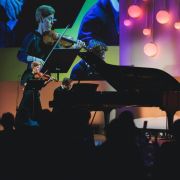
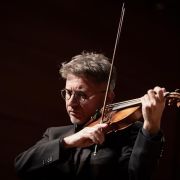
When they met in Paris in the 1980s, Kaija Saariaho and Anssi Karttunen struck up a friendship which soon translated into a prolific, long-lasting collaboration. Over the decades, it was often Karttunen’s cello that Saariaho had in mind when writing for the instrument; and now still, Karttunen brings the late composer’s music with him when he is on tour, sharing fragments of their partnership with audiences all around the world.

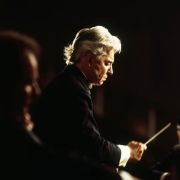
This time, Karttunen made a stop in Berlin for the local premiere of Notes on Light, Saariaho’s 2006 cello concerto from which she later extracted ideas to use as foundations for other shorter pieces. Now 20 years old, the concerto was entrusted to the Berlin Radio Symphony Orchestra under Sakari Oramo, who paired it with a Finnish classic – Sibelius’ En Saga – and Dvořák’s Eighth Symphony.


While there is no ‘intrinsically Finnish’ trait that unites Sibelius’ tone poem and Saariaho’s concerto, Oramo’s focus on certain elements gave a sense of coherence to the first half of the evening. Already in En Saga, the conductor appeared attentive to orchestral textures, polarising the chiaroscuro between the violins’ breezy arpeggios and the slow, murky movement of bassoons. The folk flavour of Sibelius’ themes, often insistent on the low register and reminiscent of dance, was enhanced by the concrete, tactile sound of the orchestra – in particular the strokes of violas introducing the second subject. Conversely, the brass mostly shone through in the middle-high register, completing a palette of juxtaposed timbres and nuanced dynamics.
Similar qualities were to be found in Oramo and Karttunen’s interpretation of Notes on Light. As is frequent in Saariaho’s works, single musical objects – a specific pitch, gesture or timbre – become charged with meaning to an analytical, almost scientific degree. In Notes of Light, the composer’s microscope zooms in on two semitone movements, with the note of F sharp being the ultimate unifying centre of the piece. Within this frame, the soloist is required to play a part that is devilishly difficult. Karttunen made lyrical what might sound like an experiment in endurance for any string player: glissandi, impossibly long sustained notes with imperceptible bow changes, trills, tremolos, playing not just near the bridge but also on it and behind it. Almost an orchestra in and of itself, the cello was enveloped, followed and contradicted by the ensemble, equally rich in colour thanks to an animated percussion section and airy harp and celesta. When soloist and orchestra merged, like in the fourth movement Eclipse, they did so in overwhelming, crushingly slow waves. Saariaho’s score was at its best in these moments of free resonance.


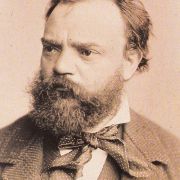
Admittedly, Dvořák’s Eighth is a peculiar specimen of a symphony. Seemingly impermeable to the desperate musings of late Romantic composers, the Eighth pushes upwards, the G minor at the beginning being only a quick stop before the arrival of its parallel major. Oramo too yielded to optimism, rising up to forte dynamics from the start and letting themes flow easy. Specific touches in the orchestration, like the many appearances of the first flute, were delightful; and the third movement, graciously ruled by a waltz, was entertaining. Not as convincing was the first one, whose structure came off as somewhat loose and rhapsodic. Nonetheless, the evening ended on a positive note with the finale, whose easy-going melodicism – crowning the flute as the symphony’s hero – made it the highlight of the performance.