From bronze autumnal hues to crystalline azure blues, the intimate and introspective to the thunderous and overwhelming, this Hallé concert was an evening of contrasts. The vast choral expanse of the seven seas and cosmic wonder in Vaughan Williams’ A Sea Symphony that closed the evening stood in stark contrast to the earthy, autumn-tinged introspection of the opening Mahler songs, differing both in scale and in their visions of nature’s power, but both packing an emotional punch.

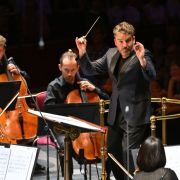
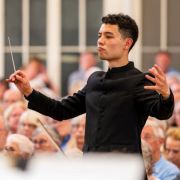
Mahler’s Rückert-Lieder unfolded as an introspective journey, with baritone Huw Montague Rendall standing in for an indisposed Chen Reiss. Under Tarmo Peltokoski, the Hallé’s swirling strings and woodwinds cast an ethereal spell in Blicke mir nicht in die Lieder!, though Montague Rendall took a moment to settle in the opening lines of this all-too-brief song. Peltokoski maintained a finely judged balance throughout, bringing a magical lightness to Ich atmet’ einen linden Duft, where Montague Rendall sounded assured, if slightly preoccupied with his score.


A warmer palette emerged in Liebst du um Schönheit, enriching both text and tone, before a deep melancholia descended in Um Mitternacht. In the closing Ich bin der Welt abhanden gekommen, singer and conductor seemed completely unified. Montague Rendall, closing his score for the final verse, created one of the evening’s most extraordinary moments: poised, inward and profoundly still.
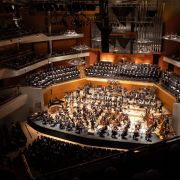
Vaughan Williams’ A Sea Symphony opened the second half with crashing waves and monumental grandeur. The four movements – A Song for All Seas, All Ships; On the Beach at Night, Alone; The Waves; and The Explorers – chart a vast journey from proclamation to transcendence. At the choir’s command to “Behold the sea”, the combined forces of the Hallé Choir and Hallé Youth Choir (who completely filled the choir stalls) delivered a thrilling wall of sound that filled Bridgewater Hall (underpinned by and rumble of the organ). Their diction was initially pristine, crisp and incisive.
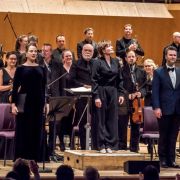
Montague Rendall’s first solo, accompanied by reduced strings, struck an effective balance. Soprano Silja Aalto, replacing Reiss as the soprano soloist, brought clarity of diction, though without quite matching the choir and baritone soloist's more idiomatic English. Aalto’s large voice consistently rode the orchestral swell with ease. Montague Rendall was particularly convincing in the bleak, nocturnal second movement, where the reduced choir added atmosphere, despite a slight dip in clarity on occasions.


The Waves, belongs largely to the choir. Peltokoski’s tempo felt a touch cautious, slightly blunting the music’s biting energy and the sharpness of its wind-swept textures. In the vast final movement, The Explorers, a similar restraint affected momentum. While it illuminated moments of text, evoking the boundless space between ocean and stars, faster passages occasionally lacked the propulsion needed to carry the music fully forward. Even so, the choir’s intonation remained strong and secure throughout, despite some inconsistency in diction towards the close. Montague Rendall and Aalto were commendable for their balance and conviction in their passages together. A stillness descended as the final ships sailed off farther and farther into the distance, Peltokoski held the silence perfectly.
Faults aside, this was an impressive and often thrilling performance. With a little more drive and textual precision, it might have surged from a strong four-star achievement to something truly overwhelming.