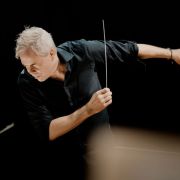
One is either entirely courageous or extremely foolhardy in opening a symphonic season with Mahler’s mighty Second Symphony, the “Resurrection”. With the National Symphony Chorus Ireland, Alexander Shelley proved himself to be the former, revelling in this mystical and mysterious work’s gargantuan forces and conducting the entire 90-minute score entirely from memory.

Mahler began the work at the age of 28, but its final form took six years to emerge. It is a tumultuous and undeniably thrilling work, evoking the existential terror of death, memories, the absurdity of life and, finally, resurrection. Vast forces are required. The Dublin stage was seething with musicians: a plethora of horns and trumpets, as many strings as possible and a significant off-stage brass and percussion ensemble. Above, the NSCI filled the choir balcony, joined by two female soloists and an organist.


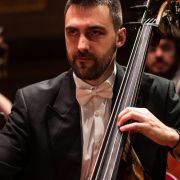
Right from the start, Shelley instilled a mood of unsettling menace with the visceral attack of the cellos and double basses. There was a palpable sense of terror in the tremendous crescendos and fierce attack of the cellos’ col legno. As the music hurtled towards its climaxes, Shelley was not afraid to let the NSOI sound dangerous. The great, strident discords before the recapitulation became almost physically uncomfortable, the accumulated dissonance pushed to the limits.
Pausing ever so briefly (nothing like the five minutes Mahler calls for in the score) Shelley immediately changed the emotional temperature, establishing a charming atmosphere for the Ländler. After the sonic boom of the opening movement, I was struck by how delicately Shelley and the orchestra phrased the staccato crescendos and diminuendos above the swaying dance rhythm. Crucially, there was something fragile behind this charming dance: memories of childhood, of a more innocent time.
The Scherzo brought another world entirely. The opening drumbeat abruptly shattered the reverie, as Shelley found a judicious balance between the humorous and grotesque sides of the music. The music’s apparent frivolity gradually became sinister, culminating in an extraordinary cry of despair. Here Shelley produced an orchestral eruption of terrifying force, leaving the impression that Judgement Day had just been announced.

The soloists, Dame Sarah Connolly (mezzo-soprano) and Tara Erraught (soprano), proved very good. They took their places with the choir during the third movement and, with little room remaining on the stage, both singers sat in the choir balcony. This meant that their voices blended into the choral tapestry behind them rather than shining forth. Connolly imbued every word of Urlicht with religious awe and very clear enunciation. The amber hues of her mezzo voice were warm and sensitive, but needed greater projection. Erraught sang in the final movement with great expressiveness and simplicity, gently caressing her top pianissimo notes.


The finale is where any performance of the Resurrection ultimately stands or falls, and Shelley proved a persuasive guide through its immense psychological landscape. The off-stage brass created an appropriately otherworldly atmosphere, while the orchestra moved between catastrophe, stillness and expectation with a strong sense of direction. Crucially, Shelley resisted the temptation to make the music merely monumental. There was space for the quiet passages to breathe, allowing the eventual entrance of the chorus to acquire its full significance.
When the National Symphony Chorus Ireland finally whispered “Auferstehn”, it was finely controlled. The juxtaposition between the hushed “Hör’ auf zu beben!” and the forceful command that follows was particularly effective. From there the performance gathered an almost irresistible momentum, the orchestra, chorus and soloists building towards Mahler’s extraordinary vision of resurrection.
The effect was transcendental – as if the mind at last had understood the happiness of life after the great chasm of death.