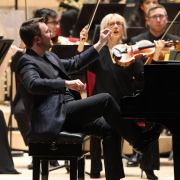
This was not a normal world premiere. There was no polite round of applause and a relieved dash to the bar for interval drinks. Instead, there was a prolonged, rapturous reception for the soloist, who had really earned the accolade. The work which inspired this welcome turn of events was Gavin Higgins' Clarinet Concerto, a co-commission between the Royal Liverpool Philharmonic Society and the Royal Philharmonic Society, and premiered at Philharmonic Hall.

It is something of a groundbreaking work. It's a long piece for a wind concerto – around 35 minutes – and is split into four movements, including a searing cadenza. Labelled ‘Nocturnes’, these are far from the restrained, quiet, introspective works which often define pieces of 'night music'. There were moments of intense emotion, even violence, although there were frequent episodes of repose where the audience could take a moment to catch a breath before the action built up again.


Higgins says he was inspired by “queer nightlife”, though the piece began life as a reflection on aspects of ghosts. The first movement, We were ghosts takes its title from Andrew Holleran's 1978 novel Dancer from the Dance. Here, we are in the gay nightlife experienced in 1970s New York. There's a gentle outset with a distinctly bluesy feel. The calculated build up of interwoven textures and dense orchestration – something akin to a slow march – led to a massive climax. That relaxed into the second movement, Sawdust and Sweat, inspired by Jeremy Atherton Lin's 2021 memoir Gay Bar: Why We Went Out. Here are characters who are as flamboyant as they are closeted, macho versus camp. From almost imperceptible clarinet entries, against a gentle orchestral accompaniment, it built into flashes of unprovoked violence.
The third movement looked at an unravelling relationship between two men. And Love Spooled Before Us, from David Tait's poem End Credits featured a beautiful conversation between clarinet and cor anglais. Again this built to a massive climax and then led to that cadenza. Here was sensuality colliding with sadness. The finale, Everyone Moves Their Extraordinary Bodies, from Guillaume Dustan's I'm Going Out Tonight takes us to the Parisian gay nightclub scene. It was a pulsating, energetic virtual celebration where one could easily feel the dance energy.

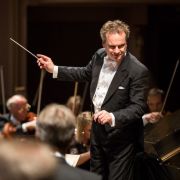
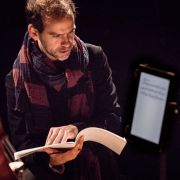
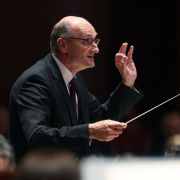
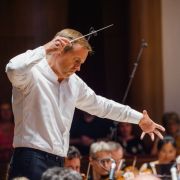
But who – apart from the composer – was the star of the show? It had to be clarinettist Mark Simpson. The Liverpool-born player has carved a significant career as both performer and composer, but his exemplary skills were tested to the limit in this demanding work. Particular praise should be heaped upon him for the quite brilliant cadenza; here were extreme pianissimos, long and complicated runs and glissandi, rapidly repeated notes, micro intervals and flutter-tonguing while, all the time, taking the instrument to rarely explored places. Complemented by a seriously on-form Royal Liverpool Philharmonic Orchestra under conductor Adam Hickox, Simpson displayed a virtuosity which must make him, possibly, the best clarinettist in the UK today.


Bookending this great performance were pieces from Britten and Stravinsky. The concert opened with a charming performance of Britten's 1974 Suite on English Folk Tunes. From the insistent and lively opening Cakes and Ale, through the chattering Hunt the Squirrel for violins only through to the soulful cor anglais solo in the overwhelmingly sad Lord Melbourne the whole suite faded into a beautiful conclusion. There was a shapely performance of The Rite of Spring... if shapely is a word which can be used for this earthy work. Moments of delicious introspection were supplanted by intense drama, with Hickox bringing the concert to an explosive conclusion.