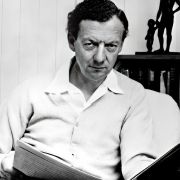
Britten and Vaughan Williams were worlds apart socially, temperamentally and musically, so hearing both composers’ work side by side at Friday’s BBC Prom was interesting and revealing. The younger composer’s Violin Concerto is one of his most striking works, ambitious in its technical scope and forthright in its emotional frankness. As Britten developed, he needed the human voice and his outsider obsession to fire his best music. The concerto was the last of his youthful works to be free of that sense of alienation.

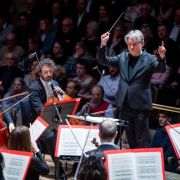
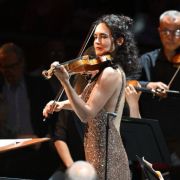
Andrew Manze and the Royal Liverpool Philharmonic Orchestra were alert to the orchestral and rhythmic brilliance of the score, creating a very expressive backdrop for the committed soloist, Simone Lamsma. Rarely has the work sounded more accomplished and uniquely passionate. Manze held the occasionally creaky structure of the Passacaglia together, leaving Lamsma to soar. In the extended final section, which seems to be seeking out and failing to find a peaceful conclusion, the soloist held the uncertain ecstasy and with it, the audience in the palm of her hands.


Vaughan Williams’ music can be very direct and intensely his authentic self, as in the Tallis Fantasia, but his Ninth Symphony, written very close to the end of his life, has a tone that is hard to pin down. In Manze’s interpretation, he sought to find a melancholy fatalism. Looking beyond from the well-known connection to Tess of the D’Urbervilles, there is something more personal at play here than the angry Fourth or the apocalyptic Sixth; this is music about the struggles to hold onto life in the jaws of old age and death. There is defiance, pity, anger and a reluctant resignation in the final bars.

Manze adopted generally slow tempi, grading the brass in a way that not only gave shape to the movements but softened the tone, emphasising the tragedy. In the finale this was most telling, the opening section which is less heavily scored and is more harmonically stable, grew at a stately pace until the second half of the movement seems to present insurmountable challenges and before finally dissolving into a disembodied E major – one of the most enigmatic endings of any symphony, it was controlled to perfection in this performance. Also, mention to should be made to the quartet of saxophonists who provided the autumnal colour and jauntiness.


The concert opening with a spacious and warm account of the Tallis Fantasia. Manze’s ability to add that extra touch of atmosphere in his Vaughan Williams interpretations in evidence again here.
Carmel Smickersgill provided a youthful counterpart to the symphony after the interval. A Brick Thrown with Love was a short three movements of brightly written orchestral colours and slightly ambiguous moods. The composer showed much skill in handling the big orchestra, while the material, which was mostly tonal, had some memorable touches. Overall it felt safe, however, lacking ambition or vision. Young composers need to remember that it’s not enough to write music efficiently, but they need to have something to say.