What more could you want from a night at the opera? Verdi considered a tangled love triangle, raging jealousy, political scheming and a very public murder all wrapped around some dubious mysticism, perfect material for his new opera commissioned by the Teatro San Carlo. Shelving King Lear, the actual assassination of Sweden’s King Gustav III at a masked ball in 1792 was his new starting point, but the Neapolitan censors firmly drew the line at staged regicide. Un ballo in maschera was eventually relocated to the USA, the King demoted to Riccardo, Governor of Boston, an emigrant English aristocrat.

For this 2024 production from Zurich Opera, director Adele Thomas moves the setting forward to the late 19th century, after the Civil War when America was rapidly changing with expanding industry, railways and the arrival of electric light. The social inequalities of the 1880s spark unrest and the widespread use of laudanum echoes today’s opioid crisis and news headlines. While there are hints in the production, given the festival theme of USA 250, it feels unexplored. But Ballo swings between comedy and tragedy, and Thomas captures the mercurial undercurrents below the opulent veneer perfectly.


Hannah Clark’s costume and set design are a major feature, a pavilion on a revolve becoming a steeply raked anatomical theatre, soothsayer Ulrica’s den, a dingy back alley, a room in Renato’s house and finally a carousel with fairy lights. Colours are monochrome or very muted, only bursting out into gorgeous pastel frilly dresses for the final masked ball scene. Men wear frock coats and stovepipe hats, women long black frocks, the sailors crowding round to hear Ulrica’s prophecies a welcome touch of subdued blue. Franck Evin brings the dark set alive through his vivid lighting, the newly invented bulbs flickering at dramatic moments. The revolve works well but places performers well back from the orchestra, which led to some untidiness in timing between pit and stage early on.
An autopsy of Riccardo’s body, with the chorus looking down from steeply raked ranks, takes place during the overture, the extraction of the bullet that killed him done with stylish reactions, a distraught Amelia shockingly bursting into the all-male medical world. It’s a total spoiler, of course, but in any case Ulrica’s spirits set the course of the opera at the end of Act 1. We know where the story is going, but Verdi’s music tells the tale splendidly in his multi-layered score, conducted with verve by Gianandrea Noseda.
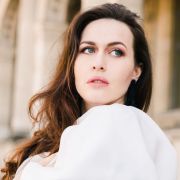
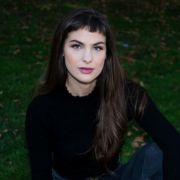
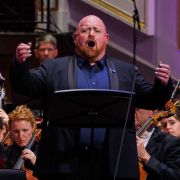
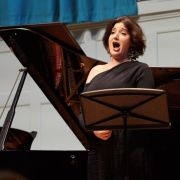
This love triangle needs three strong voices, and on opening night of this double-cast run, Stephen Costello completely inhabited the conflicted Riccardo, his tenor secure and bright, building to a thrilling “Ma se m’è forza perderti”. His supporter and friend Renato was sung with noble gravitas by Dalibor Jenis, wracked with jealousy, his showdown with the now exposed Amelia fizzing with menace at the start of Act 3. Elena Stikhina sang Amelia with conviction though her light sound did not quite match the intensity of her lovers, but her desperate “Morrò, ma prima in grazia”, where she pleads to see her son before she dies, was a highlight, complete with beautifully plangent cello solo.


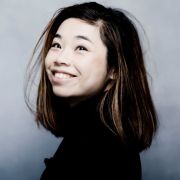
Mezzo Yulia Matochkina was an earthy Ulrica, presiding over her séances with a knowing confidence, her dark burnished tones capturing the dangerous spiritual world. Darkness needs light, and so Rebeca Olvera’s feisty Oscar proved an entertaining foil, sparklingly clear in this rare Verdi trouser role, championing Ulrica and innocently failing to read the room when he enthuses about the masked ball while a serious domestic situation unravels behind him. Olvera’s “Saper vorreste” where Oscar playfully tries, and fails, to conceal Riccardo’s disguise, was as entertaining as it was tragic.
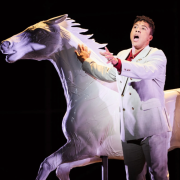
Thomas balances light and dark well, with genuinely sinister and unpredictable characters. Conspirators Samuel and Tom, sung deep in their boots by Brent Michael Smith and Stanislav Vorobyov, were particularly evil, threatening Amelia in the back alley so convincingly you really felt for her safety. The large double chorus was in stunning form, augmented with dancers, strutting and cartwheeling suits in Act 1 and adding can-can glamour to the finale. It’s a long wait for the gaiety of the ball, here the entire cast within the revolving carousel in a stunning visual display of movement and colour. While the frocks are lavish, the disguises are plain robber masks, perhaps exposing the sinister undercurrent beneath the showtime extravagance.
Noseda drew sparkling Italianate colours from the large Zurich Opera Orchestra, his gestures ever alive to his singers. With the open pit in Edinburgh, there were occasional issues of balance, but what a treat to hear this lesser-performed Verdi score given such vitality to this enjoyable production.