Sometimes, the opening of a work is so famous that it can eclipse all that follows it. The sunrise of Also sprach Zarathustra, with its underlay of contrabassoon, the pounding timpani and its massive climax laden with brass and organ are so familiar from Kubrick’s 2001 that it can be hard to unsee the ape throwing his bone into the air and to remember that after its first two minutes, Richard Strauss’s tone poem follows with half an hour of music whose purpose is confusing, to say the least. I doubt that more than a handful of last night’s audience members could give you a full explanation of Nietzsche’s philosophy and how it does or doesn’t map onto the nine movements.

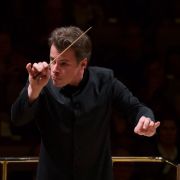
So it’s probably easiest to treat Zarathustra as purely abstract music. In that famous opening, John Storgårds and the BBC Philharmonic played with such gusto, milking the closing organ chord to the max, that it couldn’t fail to put a smile on the audience’s faces. After that, they turned in a performance that was creditable if not exactly revelatory, full of orchestral colour and by turns incisive, euphoric or tender. It wasn’t free from errors and uncertainties, but enjoyable nonetheless.


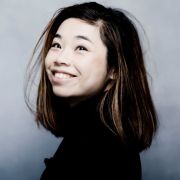
If only I could say the same about the Sibelius Violin Concerto in D minor in the first half. Soloist Sueye Park, making her Proms debut, treated us to much lovely sound and sure-footed dynamics and phrasing, delighting with delicate pianissimi and convincing us with her choices of when to accelerate and when to hold back. But for a work that can provide so many thrills, the orchestral performance was strangely tame – accenting and orchestral colours muted, dynamic contrasts lacking. Park deserved better.
Nor was I convinced by Betsy Jolas’s Tales of a Summer Sea. I understand the idea – the string swells interleaved with brass, woodwind, marimba and percussion effects evoking the repeated crashes of waves in a storm – but I’ve spent enough time on oceans to know that Jolas’ music didn’t evoke the same feelings as many other composers, from Mozart to Rimsky to Britten.

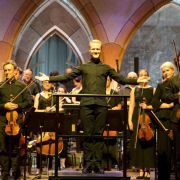
The late night Prom, however, with Thomas Dunford and the Jupiter Ensemble, proved an altogether more satisfying experience, the combination of the two concerts demonstrating how this festival can transport us to different ages and different settings. John Dowland is now four centuries in his grave, but I find it hard to conceive of better music to soothe a troubled mind at the end of a long day, so delicately poised is its melancholy. Laurence Kilsby demonstrated the utmost of earnest yearning in a light tenor voice smooth as satin. The programme had a touch of “Downland’s greatest hits” to it, with such numbers as Can she excuse my wrongs (both sung and in its instrumental form as The Earl of Essex Galliard), Sorrow, stay and Lachrimae (again, in both vocal and instrumental form). Dunford was an engaging presenter as well as fine lutenist and bandleader.


If anyone can match Downland in exquisite melancholy, it’s Henry Purcell, and a short set ending in An Evening Hymn completed a delicious hour of gentle musical catharsis. Dunford is ever the showman, however, and brought on a trio of drum kit, trumpet and baritone sax for a set of decidedly non-baroque encores, persuading the audience to sing along on the mildly specious excuse that Dowland would have had people at home singing his madrigals.
A final word: it’s worth noting that the BBC Proms are first and foremost concerts for broadcast. Kilsby’s diction was often smothered in the cavernous bulk of the Royal Albert Hall, as indeed were the more delicate passages of Park’s violin, but both are considerably more audible on the audio replay than they were in the hall.