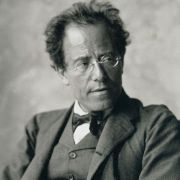
If the Berliner Philharmoniker can lay claim to any Mahler symphony, it’s to the Second. The composer himself conducted the orchestra in the work’s premiere in December 1895, having already tried out the first three movements earlier in the year at the invitation of Richard Strauss, simultaneously his great ally and antipode.

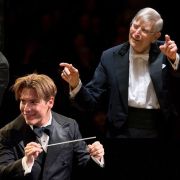
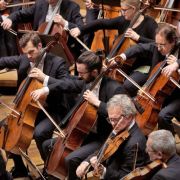
By all accounts, the orchestra acquitted itself admirably back then. But I doubt even Mahler could have imagined the level of virtuosity it would reach in the interim. And Daniel Harding, making his first return to the orchestra since his headline-grabbing appointment as Music Director Designate at the Los Angeles Philharmonic, revelled in the opportunities this sheer technical brilliance afforded him. This was a high-definition reading big on contrast, detail and thrills.


The remarkable opening was immediately arresting, the violins slicing into their tremolando and the cellos and basses digging in with an ideal combination of muscle and sinew. I don’t think I’ve ever been reminded of the storm-tossed opening of Wagner’s Die Walküre quite so much as I was here. And so the movement continued: drama to the fore, sharply etched anger and hand-wringing juxtaposed against beautifully shaped moments of consolation – many here, as throughout, featuring the lonely figure of Dominik Wollenweber’s cor anglais surveying the desolate soundscape.
The contrast to the Ländler-like Andante could hardly have been greater, its opening theme – and especially its joyous pizzicato reprise – all innocent smiles, despite the darkness that was never far away. The Scherzo bristled with coiled tension, winding its way insidiously towards a shattering final outburst out of which Marianne Crebassa emerged, Erda-like, to deliver an Urlicht of consoling wisdom and warmth, her smooth burgundy mezzo supremely moving. A special mention, too, for the perfectly gauged trumpets in their gentle chorale.
We were launched headlong into the finale (as Mahler stipulates) with a truly cacophonous evocation of chaos. Throughout this massive movement – surely one of the composer’s most episodic – the control and discipline of Harding’s interpretation brought considerable benefits. Each section was superbly performed, with outstanding solo work. There were too many highlights to mention, but the eloquence of the trombones’ quietly imposing chorale, leading into the horn’s soaring triplet theme, was especially memorable.


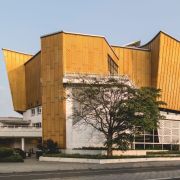
Harding’s achievement in tying all these elements together was considerable, even if, as we made our way towards the final call to judgement – expertly stage-managed – the flipside was a certain sense of relentlessness in terms of tempo and orchestral timbre, emphasised by the Philharmonie’s bright acoustic. Against that, the entrance of the Rundfunkchor Berlin – at an impeccably controlled ppp – was all the more arresting, with soprano Johanna Wallroth emerging from their midst to soar as beautifully as one could wish. The final minutes were excitingly done, too, the finely-drilled chorus matching the brilliance of the orchestral playing.
Was that final sense of release as powerful as it might have been? Maybe not, and occasionally the deeper sense of a trajectory from darkness to redemptive light was lost beneath the dazzling surface. At the end, though, one was in no doubt that one had witnessed a performance of the highest possible standard, marshalled by an expert hand. As such, this was a thrilling evening.